How to Choose a High Quality Dog Food for Sensitive Tummies

If your pup has a sensitive tummy, you already know the drill. You find a food that seems to work, and then one day: loose stools, gassiness, and a dog who won't touch their bowl. It's frustrating. But feeding a sensitive dog doesn't have to feel like a guessing game.
The honest answer? Less is more. Fewer ingredients, cleaner labels, and a consistent routine are the fastest path to a calm, happy belly. Here's how to find the right food and how The Honest Kitchen can help you get there.
Start with the signs (and your vet)
Soft or mucusy stools, intermittent vomiting, gas, and appetite dips are all classic signs of a sensitive tummy. They often trace back to a specific ingredient or feeding pattern — which means diet can actually fix them.
Before changing anything, keep a 7-day log of meals, treats, stool quality, and symptoms. That short snapshot often tells you exactly what you're dealing with. It also gives your vet useful context if you need it. And if you see blood in the stool, lethargy, weight loss, or signs of dehydration, call your vet immediately. Those go beyond a food switch.
Look for human grade, limited-ingredient recipes
When shopping for a sensitive dog, the label is everything. Start here:
Single-protein, short ingredient lists
The fewer variables, the easier it is to identify what's causing trouble. When you're scanning a label, look for named muscle meats up front — turkey, white fish, lamb. Not "animal protein." Not "meat by-product." Real food you can picture.
Single-protein recipes take it a step further. One protein source means one thing to react to. If your pup thrives on white fish but struggles with chicken, that connection becomes a lot clearer when there's nothing else in the mix to second-guess.
If you're still working out which proteins agree with your dog's tummy, try a single-protein recipe with a novel protein they haven't eaten before. It's one of the simplest ways to start fresh and get some answers.
Gentle processing
Human grade matters
Most pet foods are feed grade, meaning they can contain meals, fillers, and heavily processed proteins that are hard on a sensitive tummy. Human grade is a different standard entirely. It means every ingredient and every step of production meets human food safety requirements set by the AAFCO.
The Honest Kitchen was the first human grade pet food company and that standard shows up in the ingredients, the facilities, and the testing. Whole, recognizable food that's easier to digest, and easier to trust.
The ingredients to skip
The most common food allergens in dogs are some of the most widely used ingredients in pet food, which is part of why reactions can be so hard to pin down.
Most common allergens to watch for:
If your dog is showing signs of sensitivity, these are the first ingredients worth eliminating.
- Chicken (the #1 reported allergen in dogs)
- Beef
- Dairy
- Wheat
- Corn
- Soy
- Eggs
What else is worth avoiding:
- Artificial preservatives like BHA, BHT, and ethoxyquin
- Synthetic colors and added sugars
- Vague ingredients like "animal fat" or "meat by-product" — red flags when trying to pin down a problem
- Corn, soy, and wheat as primary fillers
- Heavy legume bases and rich gravies
The ingredients to grab for
Limited ingredient recipes reduce the variables, which means fewer guesses and faster answers. Here are some friendly ingredients for your dog's tummy.
- Novel proteins your dog hasn't eaten before. Turkey, white fish, and lamb are good places to start, but this may differ depending on your pup.
- Gentle carbohydrates like rice, oatmeal, sweet potato, and pumpkin to help firm stools without stressing the gut.
- Functional fibers like pumpkin, beet pulp, and inulin to support beneficial gut bacteria.
- A studied probiotic strain can help the tummy along during food transitions.
Why dehydrated food is worth a serious look
There's a reason fresh refrigerated and frozen dog food has exploded in popularity. Lightly cooked, single-protein recipes with short ingredient lists are genuinely good for sensitive dogs. The meals are palatable, the ingredients are recognizable, and the gentle processing helps with digestibility.
The catch? Fresh food is expensive. Pre-portioned subscription boxes can run $8–$15 a day for a medium-sized dog, and that adds up fast. Add in the freezer space, the thawing logistics, and the tighter use-by windows after opening. For a lot of pet parents, it's just not sustainable long-term.
Here's what most people don't realize: dehydration is one of the gentlest ways to preserve food. It removes moisture without high heat, which means the nutrients, enzymes, and whole food integrity stay largely intact. You're not sacrificing quality for convenience. You're just removing the water.
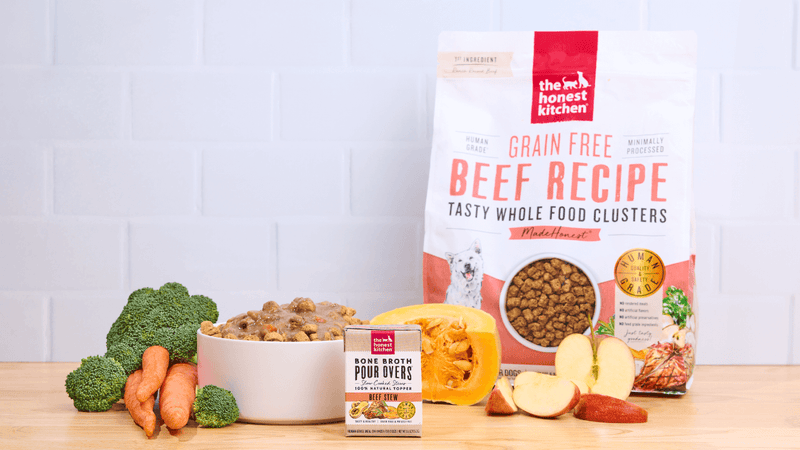
The Honest Kitchen's Wholemade dehydrated meals give you fresh quality nutrition at a fraction of the cost. Just add warm water, mix, wait 3 minutes and you've got a stew-like meal made from the same human grade ingredients you'd find in a refrigerated fresh food: whole proteins, real vegetables, no fillers. It is a shelf-stable and easy to store option for a sensitive tummy to settle into.
A few recipes to explore
Wholemade Dehydrated Limited Ingredient Line: These recipes offer the benefits of fresh, homemade meals with real ingredients, minimal processing, and robust nutrition, all within in a convenient, cost-effective form. Made with just 6 key ingredients, just add warm water to serve as a complete meal that's ideal for dogs with sensitivities.
Perfect Form® Herbal Digestive Supplement: Our digestive supplement has herbs like slippery elm, fennel, and plantain to help soothe and protect the GI tract and reduce loose stools from environmental stress, dietary indiscretion, or transitioning to a new diet.
Instant Goat's Milk Plus: Add warm water to this powdered goat's milk deliver the digestive benefits of 1.25 billion active probiotics and digestive enzymes in each serving. A tasty addition to their bowl, use it as a daily topper, with dehydrated food, or freeze it into a treat.
Not sure where to start? Check out our recipes geared at picky eaters, digestion, or allergies.
Transition slowly. Really slowly.
Even the best food can cause GI upset if you switch too fast. A gradual transition gives your dog's digestive enzymes, gut bacteria, and bile acids time to adapt:
- Days 1–3: 75% old food, 25% new
- Days 4–6: 50/50
- Days 7–9: 25% old, 75% new
- Day 10: 100% new food
If stools soften at any point, pause and hold that ratio for a few extra days. For very sensitive dogs, stretching the whole process to three to four weeks is completely reasonable. An addition of Perfect Form® or Goat's Milk Plus can also help smooth the switch.
Give it time, and track your results
Once you've made the switch, keep your food diary going. A simple 1–7 stool score chart, weekly weigh-ins, and a note on energy and appetite will tell you whether the plan is working.
If symptoms persist several weeks after the transition, it's time to chat to your vet about other options. Food routines are powerful but are one piece of a full GI picture.
Sensitive tummies tend to settle when the routine is calm and the label is honest. Start simple, stay consistent, and measure what matters. Your pup's belly will thank you.