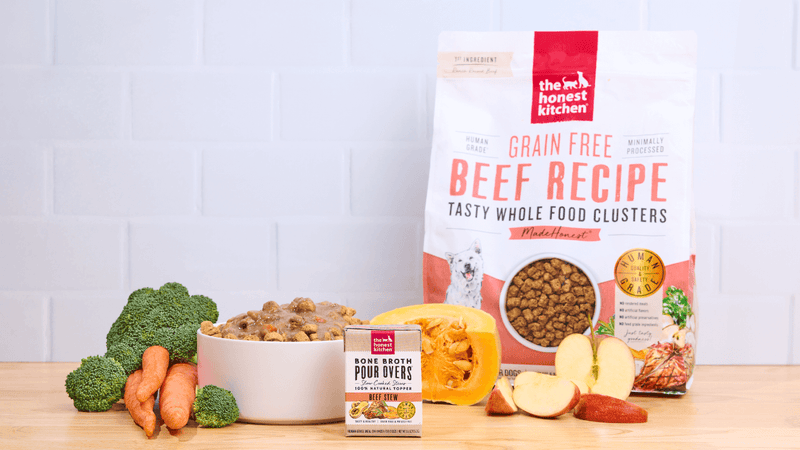
What are the Benefits of Feeding Your Dog Human Grade Food

Standing in the pet food aisle is sensory overload. Every bag makes a claim, and most of them sound the same. So how do you actually know what matters? "Natural." "Premium." "Wholesome." Human grade is different: it's a standard backed by the FDA and AAFCO, not just a selling point on packaging.
But beyond what that label means for the food itself, how does it actually help your pup? That's where the noise stops and the science starts. As the first human grade pet food company, The Honest Kitchen has spent over 20 years trying to put pets on the path to good health through good food.
Human grade is a pathway to healthier digestion, cleaner ingredients, and dogs who simply feel better. Let's break down what separates real standards from marketing shine.
Here's what we'll walk through:
- What "human grade" actually means (and why the label matters)
- How cleaner ingredients support digestibility and sensitive tummies
- The safety standards that separate human grade from feed grade
- Long term health outcomes, from skin and coat to overall vitality
- How to spot a truly human grade brand when you shop
Human Grade vs. Feed Grade: A Real Difference
Human grade isn't just a label on the bag. For a food to legally claim it's human grade, it has to meet over 100 safety standards set by the FDA and USDA. But here's what makes it truly different: those standards apply at every stage—from sourcing on the farm, through manufacturing in a certified human food facility, all the way through transportation to your shelf. The food is fully edible for humans from start to finish. It's not just that ingredients are safe; it's that they stay safe throughout the entire process.
Feed grade is not held to the same human consumption requirements. Some feed grade foods use byproducts from human food processing (like meat left on bones after human processing), or ingredients that simply don't meet human food facility standards. The label might just say "beef," but it won't detail where exactly that beef comes from or how it was handled. Without the same level of oversight, there's less transparency about sourcing and processing.
The takeaway? The words on the bag reflect what's inside it. Human grade means whole, recognizable ingredients—not mystery meals.
Cleaner Ingredients, Happier Tummies
What to look for on the label
- Whole proteins listed first (chicken, turkey, beef, fish).
- No vague terms like "meat meal" without a clear source.
- Few to no artificial colors, flavors, or preservatives.
Try this: if your dog struggles with digestion, hunt for an ingredient list short enough to read out loud without tripping over it. Our Limited Ingredient Wholemade recipe uses just six whole food ingredients for exactly this reason.
In a customer poll, 80% of pet parents reported improved digestion after switching to human grade food. (Customer poll; results not guaranteed; individual results vary.)
Cleaner in, gentler out. Your pup's belly will thank you.
Better Digestibility, Backed by Real Standards
Digestibility is about how much of a meal your dog's body can actually absorb. Whole food ingredients—real proteins, fruits, and vegetables—tend to be gentler and more bioavailable than heavily processed alternatives. Gentle handling helps keep nutrients intact, too.
But good nutrition isn't just about what's in the recipe. It's about whether that recipe is complete and balanced. That's where AAFCO comes in, setting the nutrient standards for pet food.
Here's a proof point worth bookmarking: our recipes don't just meet AAFCO nutrient profiles on paper—we completed and exceeded an AAFCO feeding trial, the gold standard for proving food works in real dogs, not just spreadsheets.
A fair question to bring to your vet: does your current food merely meet nutrient minimums, or has it been proven in a feeding trial?
Safety Standards You Can Actually Verify
Safety is where human grade really earns its keep. Because human grade food is made in a facility licensed to produce food for people, it's held to stricter safety standards around sourcing, handling, and processing.
Best part? That's a benchmark you can verify. When a brand manufactures in a certified human food facility, it isn't making a promise—it's meeting a measurable standard.
- Ingredient sourcing: non-GMO only, with the majority sourced in North America.
- Third-party trust: Certified B Corporation, plus Non-GMO Project, MSC, and American Humane certifications.
- Transparency: ingredients you recognize, sourced responsibly.
The Honest Kitchen makes its human grade recipes in a certified human food facility—the same kind that produces food for people. Made in the USA with US and globally sourced ingredients. That's exactly the kind of detail worth asking any brand about.
Long Term Health Outcomes: Skin, Coat, and Beyond
Good food today can pay off for years. Veterinarians will tell you no single meal is a cure-all, but diets built from higher-quality, whole food ingredients make it easier to manage nagging issues like food sensitivities and itchy skin.
One of the first places pet parents notice a change? A healthier skin and coat is often the visible sign that things are working from the inside out.
In a customer poll, pet parents reported benefits including 77% improved overall well-being and 71% better skin & coat. (Customer poll; results not guaranteed; individual results vary.)
Find the Right Human Grade Recipe for Your Pup
Dehydrated
Our original—and still a favorite. Whole food ingredients are gently dehydrated to lock in nutrition, then rehydrate with warm water into a fresh, home-cooked-style meal in minutes. Lightweight to store, easy to portion, and gentle on sensitive tummies.
Clusters
Wet Food
Toppers & Supplements
Want to upgrade a bowl your dog already loves? Toppers and supplements add whole food nutrition, flavor, and functional support—think bone broth, goat's milk, and pour-over boosters—so you can tailor mealtime to your pup's specific needs, one scoop at a time.
Not sure where to start? Many pet parents mix and match—Clusters for daily meals, a topper to boost interest, and a supplement for extra support. The format may change; the human grade standard never does.
The Bottom Line on Human Grade Dog Food Benefits
So where does this leave you and your pup? The human grade dog food benefits come down to a few clear wins:
- Cleaner ingredients that are gentler on sensitive tummies.
- Better digestibility, proven through an AAFCO feeding trial.
- Higher safety standards from certified human food facilities.
- Long term health outcomes you can see in skin, coat, and energy.
Not sure how to vet a brand? Ask three questions: Where do your ingredients come from? Are you made in a human food facility? Have you completed a feeding trial? If the answers get vague, keep looking.
Twenty years ago, we bet that dogs deserved food this good. The science and the stories keep proving it right. And you don't have to be perfect to do right by your pup—you just have to start. So here's your challenge: flip your dog's food bag over and read the label out loud. If the ingredients don't sound like food, isn't it worth asking why?
FAQ
What does "human grade" dog food actually mean?
Human grade means every ingredient—and the finished product—is legally edible for people. To make this claim, a food must meet over 100 safety standards set by the FDA and USDA at every stage, from sourcing and manufacturing in a certified human food facility to transportation. It's a verifiable standard, not just a marketing word.
Is human grade dog food better than feed grade?
Human grade food is held to stricter sourcing, handling, and safety requirements than feed grade. Feed grade may use byproducts or ingredients that don't meet human food facility standards, and often offers less transparency about where ingredients come from. Human grade means whole, recognizable ingredients you can trace.
Is human grade dog food good for dogs with sensitive stomachs?
Often, yes. Cleaner, simpler recipes with whole food ingredients tend to be more digestible and easier on sensitive tummies. In a customer poll, 80% of pet parents reported improved digestion after switching to human grade food. Individual results vary, so check with your vet if your dog has ongoing issues.
Is human grade dog food complete and balanced?
It can be—when it meets AAFCO nutrient standards. Look for recipes that say complete and balanced, and ideally ones that have completed an AAFCO feeding trial, which proves the food works in real dogs rather than just on paper.
What health benefits might I see from human grade food?
Pet parents commonly notice better digestion, improved skin and coat, and more overall vitality. In a customer poll, pet parents reported 77% improved overall well-being and 71% better skin and coat. Results are not guaranteed and vary by dog.