What Causes Sensitive Stomach in Dogs?

If your dog has a sensitive stomach, you're not alone. The most common causes—food intolerances, low-quality fillers, sudden diet changes, and ingredient sensitivities—are all highly manageable once you understand what's triggering your pup. This guide breaks down each cause, shows you how to identify your dog's specific triggers with a simple framework, and explains how limited-ingredient, human grade food can support long-term digestive health.
Why Sensitive Stomachs Matter
If your pup has ever refused dinner, rushed outside with an upset tummy, or left you scrubbing the carpet at midnight, you're not alone. Sensitive stomachs are one of the most common digestive challenges pet parents face—and honestly, one of the most stressful.
The good news? They're highly manageable once you understand what's actually triggering them.
As pet food options multiply and ingredient lists grow longer, digestive sensitivity has become a frequent concern for everyday families. But sensitivity doesn't have to stay mysterious.
Sensitive stomachs usually have a trigger—sometimes several. Common culprits: low-quality fillers, sudden food changes, specific ingredients your pup can't digest, stress, or routine disruptions. A passing upset is normal; chronic sensitivity signals something needs to shift. The good news? Once you identify the trigger, you can fix it.
Below, we break down the most common causes of sensitive stomachs in dogs—from food intolerances to low-quality fillers to sudden diet changes—plus a simple framework to identify what's triggering your pup.
The Most Common Causes of Sensitive Stomachs
Food Intolerance: The Lock and Key That Doesn't Fit
Food intolerance is a non-immune digestive reaction that happens when your dog's body struggles to break down a specific ingredient—a protein, grain, or dairy product.
Think of it as a lock and key that don't quite fit. The food enters the system, but your dog's digestive machinery can't process it smoothly, leading to discomfort instead of nourishment.
When an offending ingredient reaches the gut, it ferments or irritates the intestinal lining instead of digesting cleanly. Your dog's body responds by trying to expel it—fast. That's where the gas, loose stool, and vomiting come in.
The key difference between intolerance and a true allergy? Intolerance is a digestive problem, not an immune reaction. This means recurring tummy troubles are often tied to a single ingredient. Identifying and removing that ingredient—often through a supervised elimination trial—can dramatically calm chronic issues.
Common intolerance triggers: Certain proteins (chicken, beef, dairy), grains, high-fat ingredients, and artificial additives.
Low-Quality Fillers: Packing Peanuts in Your Dog's Bowl
Low-quality fillers are inexpensive ingredients—corn hulls, wheat middlings, bulk cellulose—added to pet food to increase volume without providing meaningful nutrition.
Think of them as packing peanuts in a shipping box. They fill the space, but they deliver nothing your dog's body actually needs to thrive.
These fillers pass through the digestive tract poorly, feeding the wrong gut bacteria and overloading the intestines. The result? Bulkier, looser stool and a stomach that works way harder than it should. Unlike whole-food fiber from vegetables, cheap fillers offer little support for a balanced, healthy gut.
When you swap filler-heavy formulas for nutrient-dense, recognizable ingredients, the difference is often dramatic. Your pup's digestion eases, energy stabilizes, and meals actually nourish instead of strain.
What to look for on a label: Ingredient lists you can pronounce. Whole foods. No "meal," "by-products," or vague terms. If you wouldn't recognize it in your own kitchen, your dog probably shouldn't eat it.
Sudden Diet and Routine Changes: The Cold Pool Shock
Sudden diet changes happen when a dog's food, treats, or feeding schedule switches abruptly—without giving the digestive system time to adjust.
Think of it like jumping into a cold pool instead of easing in.
Your dog's gut relies on a specific population of bacteria and enzymes tuned to their current food. When the menu changes overnight, those systems can't keep up. The result is gas, diarrhea, reduced appetite, or vomiting until everything rebalances.
Even the healthiest food can upset a sensitive stomach if introduced too quickly. A patient transition over 7–10 days protects digestion from unnecessary shock.
Life Events as Hidden Triggers
Sudden diet changes aren't just about food. Boarding, medication, house moves, new family members, or travel can all stress your pup's system and trigger digestive issues. Treat major life events like potential triggers just as much as food changes. Keep your routine as stable as possible during these times, and transition any food changes extra slowly if they happen to coincide with stress.
Pro tip: Make transitions as smooth as possible:
- Keep a food-and-symptom log. Note the date, what you fed, portion size, and any changes in stool, appetite, or energy. Patterns emerge fast.
- Give your pup a quiet, private spot to eat—away from other pets, loud noise, or chaos.
- A calm eating environment reduces stress-related digestion issues and helps you see what's really a food reaction versus what's anxiety-driven.
Ingredient Sensitivities: The Slow Burn
Ingredient sensitivity is a mild, ongoing reaction to a specific food component. It may be immune-mediated or purely digestive, but the result is the same: your pup feels off.
Unlike a full-blown intolerance, sensitivities can take days or weeks to show up. A little itching. Soft stool. Reduced appetite. Nothing dramatic—just your dog not quite themselves.
Sensitivities often develop over time, especially with diets built on the same few ingredients, high-fat foods, or highly processed formulas. Because symptoms are subtle, they're easy to miss. But once you spot the pattern and remove the culprit, improvement usually follows.
Common sensitivities: Chicken, beef, wheat, corn, soy, dairy, and artificial colors or preservatives.
Why Limited-Ingredient, Human Grade Food Makes a Difference
Understanding the difference between crowded, filler-heavy recipes and clean, limited-ingredient nutrition helps you make better choices for a sensitive tummy.
Conventional Pet Food:
- Long ingredient lists make pinpointing a trigger nearly impossible
- Low-quality fillers add bulk with little actual nutrition
- Frequent food switching masks symptoms instead of resolving root causes
Limited-Ingredient, Human Grade Food:
- Fewer, recognizable ingredients make identifying and avoiding triggers straightforward
- Whole foods deliver meaningful, gut-friendly nourishment
- Systematic elimination trials and gentle transitions actually resolve root causes
- Ingredients meet the same safety and quality standards as human food
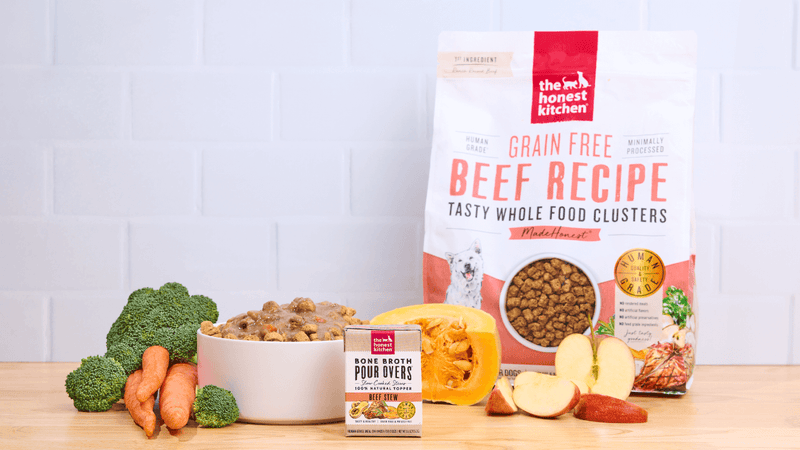
When you feed whole-food, human grade recipes—like The Honest Kitchen's Wholemade Dehydrated formulas—you're starting with a clean foundation. No fillers. No mystery ingredients. Just real meat, vegetables, and essential nutrients your dog's body recognizes and digests easily.
In a 2025 customer survey, 80% of pet parents reported improved digestion within 4 weeks of switching to limited-ingredient, human grade food. That's not coincidence. That's the power of simplicity.
Novel Proteins: A Fresh Start for Sensitive Stomachs
If your pup has been eating the same protein for months or years, their digestive system may have developed a sensitivity to it—even if it's high-quality. This is where novel proteins come in.
A novel protein is simply one your dog hasn't eaten before—maybe duck, venison, turkey, fish, or lamb instead of the standard chicken and beef. Because their immune system hasn't encountered it before, they may react better.
Novel proteins are especially useful during elimination trials. By switching to a protein your pup has never eaten, you can rule out protein-based sensitivities and often see dramatic improvement in digestion. Many pet parents find that their pup does beautifully on a novel protein formula, even if they struggled on conventional diets.
The Honest Kitchen offers several novel protein options—including fish, duck, turkey dehydrated formulas—all with the same limited-ingredient, whole-food approach that keeps digestion calm and predictable.
How to Identify and Calm Triggers: A 5-Step Framework
Step 1: Observe and Record
Start by keeping a food-and-symptom log.
Track:
- What your pup ate (including treats and table scraps)
- Timing of meals and symptoms
- Stool consistency and frequency
- Energy levels and appetite
- Any life changes (new people, moves, stress)
You don't need anything fancy—a note in your phone works fine. Patterns emerge within 2–3 weeks. You'll often spot a connection between a specific ingredient or event and the symptoms that follow.
Step 2: Eliminate Likely Culprits
Remove one suspect at a time. Start with the most common triggers:
- High-fat treats or foods
- Table scraps and human food
- A specific protein or grain you suspect
- Frequent food changes or new treats
Eliminate the suspect for 2–4 weeks as best you can. Keep your log. Most dogs show improvement within this window if you've identified the real trigger.
Step 3: Simplify and Transition Slowly
Once you've narrowed it down, choose a limited-ingredient, human grade food with a simple, recognizable recipe. Then blend it gradually with your pup's current food over 7–10 days:
- Days 1–2: 75% old food + 25% new
- Days 3–4: 50% old food + 50% new
- Days 5–6: 25% old food + 75% new
- Days 7–10: 100% new food
A slow transition gives your pup's gut bacteria and enzymes time to adjust. Even sensitive stomachs usually handle this rhythm without complaint.
Step 4: Stabilize the Routine
Sensitive stomachs love predictability. Feed at the same times each day. Keep portions consistent. Minimize treats and table scraps. Reduce sources of stress where you can (boarding, travel, loud environments).
A stable routine supports a stable gut. You'll notice the difference in weeks. Some pet parents also find that adding digestive support helps their pup feel more comfortable while the routine settles in:
Instant Goat Milk Plus — A powdered goat milk with 1.25 billion active probiotics and digestive enzymes in each serving. Mix with warm water, then add to their bowl as a daily topper, pour over dehydrated food, or freeze into a treat. Probiotics restore good bacteria to the gut—especially helpful after antibiotics or for ongoing digestive support. It's tasty enough that most pups ask for more.
Perfect Form Herbal Digestive Supplement — Our herbal blend of slippery elm, fennel, and plantain works fast to soothe and protect the GI tract. It reduces loose stools triggered by environmental stress, dietary indiscretion, or transitioning to a new diet. Use it when you need quick support during those sensitive moments.
Both work best alongside the routine itself, not as replacements for it.
Step 5: Reintroduce and Consult
Once your pup's symptoms improve—steady stool, good appetite, no vomiting—you're ready to test what's actually safe. Add back removed items one at a time, waiting 1–2 weeks between each addition. This methodical approach confirms what's triggering symptoms and what's genuinely safe for your pup to eat long-term.
Watch closely during reintroductions. If symptoms return when you add something back, you've found your culprit. Make a note and avoid it going forward. If your pup stays comfortable, you've cleared it and can keep it in their diet.
About ongoing feeding: The Honest Kitchen's limited-ingredient recipes are complete and balanced for everyday feeding. Many pet parents find that once they've found what works, they stick with it—and there's no reason to fix what isn't broken.
If you want to explore other options now that you know what triggers to avoid, our product quiz can help match you with formulas that work for your pup's new comfort zone.
What This Means for Your Dog
- Recurring tummy troubles usually have a traceable cause. This means patient observation and a simple log—not panic—are your best first steps.
- Ingredient quality directly affects digestion. Choosing whole-food, human-grade formulas with recognizable ingredients reduces chronic irritation.
- Transitions matter as much as the food itself. Gradual changes protect a sensitive stomach from unnecessary shock.
- Stress and routine influence the gut. Keeping life predictable supports steady digestion.
- Simplicity is powerful. Fewer, cleaner ingredients often outperform crowded recipes for sensitive dogs.
Frequently Asked Questions
Can treats and table scraps cause a sensitive stomach?
Absolutely. Treats and human food can introduce new fats, spices, or unfamiliar proteins that upset digestion and make it harder to identify actual food triggers. During an elimination trial, treats matter as much as meals. Stick to simple, limited-ingredient options only.
Can sensitive stomachs happen in puppies?
Yes. Puppies can develop sensitivities, especially if switched between foods too quickly or fed low-quality kibble. The good news? Starting a puppy on limited-ingredient, human grade food from the beginning often prevents sensitivity from developing at all. If your puppy is showing signs, a slow transition to whole-food nutrition often resolves it quickly.
Are probiotic supplements helpful for sensitive stomachs?
Probiotics can support gut balance for some dogs, but effects vary widely by strain, quality, and individual pup. Adding probiotics without addressing the underlying trigger (a problematic ingredient or routine change) is like putting a bandage on the problem. Work with your veterinarian to identify the actual cause first, then discuss whether probiotics make sense as additional support.
Is human-grade food always better for sensitive dogs?
Human-grade food, particularly-ingredient and thoughtfully balanced recipes, often reduce potential triggers significantly. But individual responses vary, and nutritional adequacy matters. Make sure any new food meets AAFCO standards for your pup's life stage. When in doubt, chat with your vet or work with a pet nutrition consultant to ensure the formula is right for your dog.
Moving Forward
Sensitive stomachs aren't a life sentence. They're a signal that something needs to change—and most of the time, that change is simpler than you think.
Here's your action checklist:
- Keep a food-and-symptom log to spot patterns
- Identify one likely trigger and eliminate it patiently
- Choose a clean, whole-food formula and transition slowly (7–10 days)
- Stabilize your pup's routine and reduce stress where you can
- Give the changes time to work (2–4 weeks minimum)
- Watch what shifts—energy, appetite, stool quality, mood
Most sensitive stomachs respond beautifully to this kind of care. Your pup deserves to enjoy meals without discomfort, and you deserve a break from the stress and cleanup.
You've got this. And we're here to help. Want extra guidance?
Book an appointment with a THK nutrition expert →
Or explore our sensitive stomach–friendly dehydrated formulas →