Do Vets Recommend Fresh Dog Foods?

You're picking up your new pup from the shelter this weekend. You want to do everything right from day one, and that starts with food. You do a deep dive: kibble, raw, freeze-dried, fresh. Fresh catches your eye. Real ingredients, minimal processing, food that actually looks like food.
You bring it up at a vet visit before you even bring him home. Your vet's take? Less focused on format than you expected. The thing they kept coming back to: is it complete and balanced?
So what does that mean? What does fresh food have to offer? And what do vets actually recommend? Here's what the research says.
Strip away the marketing and the benefits of fresh food come down to two things: taste and nutrition.
What Are the Real Benefits of Fresh Dog Food?
- Taste: Fresh food is consistently more appealing to dogs than dry kibble, and for picky eaters, that's a big deal. A dog that cleans the bowl is getting more nutrition than one that doesn't eat at all.
- Nutrition: The nutrition advantage comes from what fresh food isn't: heavily processed. A University of Illinois study found that human grade, fresh style meals deliver amino acid digestibility above 85%, while controlled comparisons show dry kibble falls significantly short on protein, fat, and calorie digestibility. In plain terms, less processing means more of the nutrition in the bowl actually reaches your dog. Higher absorption, less waste, more value from every meal.
One honest caveat: Vets don't necessarily recommend fresh food as a blanket rule. The recipe matters more than the format. A gently made meal that's nutritionally incomplete can cause real problems over time, so complete and balanced still comes first, whatever you feed.
Where Fresh Food Gets Complicated
It needs fridge and freezer space, and plenty of it. It may need thawing on a schedule, which means remembering tonight's dinner this morning. Opened packs spoil in days. Those costs add up quick, especially for bigger dogs, because you're paying to refrigerate water and rush it across the country.
Fresh food is great and it is also high maintenance. And here's the part worth sitting with: the research points to minimal processing and quality ingredients as the source of the benefits, not the refrigerator. Which raises a fair question: what if you could keep the nutrition and skip the logistics?
How Does The Honest Kitchen Compare to Fresh Dog Food?
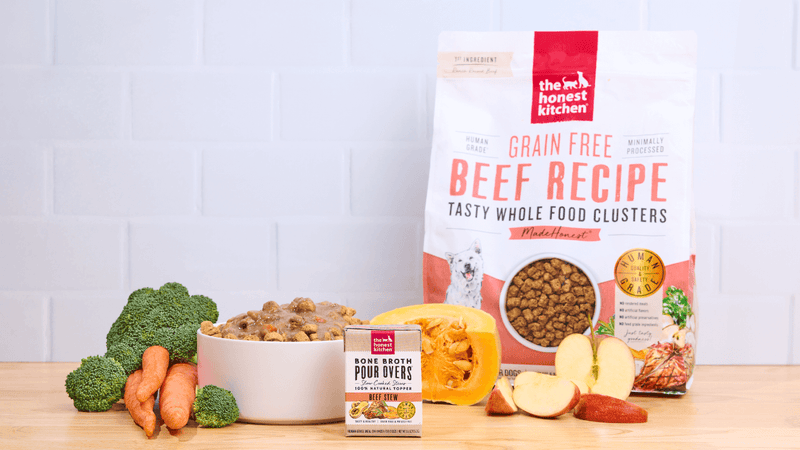
The Honest Kitchen's Wholemade dehydrated food and Whole Food Clusters were built on the same belief that drives fresh feeding: that dogs deserve real, whole ingredients made to a human food standard. We concentrate the benefits of fresh, homemade food—real ingredients, minimal processing & serious nutrition—into every box or bag.
Lucy Postins founded The Honest Kitchen in 2002 — right in her San Diego kitchen — after her Rhodesian Ridgeback, Mosi, had chronic ear infections that conventional food couldn't fix. She tried using gentle dehydration to remove moisture while keeping whole-food ingredients intact, preserving nutrients in a shelf stable form. When she noticed big results, The Honest Kitchen was born. As the first human grade dog food company in the world, that means our food is made with high quality, human grade ingredients and produced to the same standards of quality and safety as the food you eat.
Our recipes are developed in collaboration with veterinarians, board-certified veterinary nutritionists, and PhD food scientists. Each ingredient is there for a reason, delivering the right levels of protein, fat, and micronutrients. Recipes are tested at independent ISO-accredited labs throughout development and production to make sure every bag holds up to what's on the label.
That rigor carries through to every supplier and every batch.
Wholemade Dehydrated Food. Whole, human grade ingredients are gently dehydrated to lock in nutrients and natural flavor. Just add water and you have a complete, balanced meal that matches fresh in digestibility and ingredient quality, without the refrigeration or short shelf life. It's also worth knowing that a 10 lb bag rehydrates into 40 lbs of food, which puts the cost at roughly half that of most fresh delivery services.
Wet Food for Dogs: Even the pickiest pups can’t resist our chef-crafted, human grade wet foods. Made with high-quality protein in small batches, these hearty, kettle-cooked recipes blend health and taste in every bite.
Whole Food Clusters. Real, whole ingredients gently baked to preserve their nutritional value. They're a human grade dry food made to be less processed than traditional kibbles.
What Questions Should I Ask My Vet About Fresh Dog Food?
When heading to the vet, it can be helpful to have a list of questions ready to go. Instead of "is fresh food okay?" try:
Does this brand meet AAFCO guidelines for my dog's life stage? Look for the nutritional adequacy statement on the packaging. It should read something like "formulated to meet AAFCO nutritional levels for adult maintenance" or "all life stages." No statement? That's a red flag.
Was it formulated with veterinary nutrition oversight?
Are there age, breed, or health-specific considerations I should account for?
So, Do Vets Actually Recommend Fresh Dog Food?
The science backs the appeals of fresh feeding, specifically when it comes to digestibility and nutrition.
That's exactly where dehydrated food shines. The Honest Kitchen's Dehydrated recipes start with human grade whole ingredients, then gently remove the moisture. The nutrition stays put, and so does the taste.
What you skip is everything that makes fresh feeding hard. No freezer space. No thawing schedules. No spoilage clock. Just add warm water and you've got a homecooked style meal in minutes, whether you're at home or halfway through a road trip.
Not sure which format is right for your new pup? Take the product quiz to match your dog's age, size, and health goals to the right meal in a few quick steps.
Frequently Asked Questions
Is fresh dog food actually better for dogs?
Fresh dog food can offer real advantages, particularly higher digestibility and greater appeal for picky eaters. Research shows the body absorbs more nutrients from minimally processed meals than from heavily processed dry kibble. That said, "fresh" alone doesn't guarantee quality. A fresh food that isn't nutritionally complete can cause problems over time. The format matters less than whether the food is complete, balanced, and made to a rigorous standard.
What do vets look for when recommending dog food?
Vets prioritize nutritional completeness over format. They want to know that a food meets AAFCO standards for your dog's life stage, was developed with veterinary nutrition oversight, and is made in a facility held to strict safety requirements. These criteria apply whether the food is fresh, dehydrated, or dry. You can verify AAFCO compliance by looking for the nutritional adequacy statement on the packaging.
What is human grade dog food?
Human grade dog food is made with real, whole ingredients that meet human food quality standards, produced in a human food facility, and held to the same safety standards as the food you eat. This is different from feed grade, which may include lower quality ingredients, by-products, and 4D meats. The Honest Kitchen was the first pet food brand in the US to meet the human grade standard, established in 2002.
Is dehydrated dog food as good as fresh?
Yes, when made to a human grade standard. Dehydrated dog food uses the same whole-food ingredients as fresh, with gentle dehydration that preserves nutrients and natural flavor. It offers comparable digestibility without the need for refrigeration or weekly delivery. The Honest Kitchen's Wholemade Dehydrated food is AAFCO compliant and formulated by veterinary nutritionists, the same bar as any quality fresh food.
What is the AAFCO nutritional adequacy statement?
It's the statement on pet food packaging that confirms a food meets AAFCO's nutritional standards for a specific life stage. Look for language like "formulated to meet the nutritional levels established by AAFCO for adult maintenance" or "all life stages." If a product doesn't carry this statement, it hasn't been validated as complete and balanced.
How much does fresh dog food cost compared to other foods?
Fresh meal delivery services generally run significantly more per day than premium dry kibble. Wholemade Dehydrated offers an accessible option: a 10 lb bag rehydrates into 40 lbs of food, putting the cost at roughly half that of most fresh delivery services, without skimping on ingredient quality or nutritional completeness.