Fresh Food for Dogs: Is It Worth It?

Whole food, minimally processed meals help dogs digest more efficiently, absorb more nutrients, and show it in their coat, energy, and stool quality. Fresh food has earned its popularity for good reason, but it's not the only way to get there. Human grade, gently dehydrated recipes deliver the same real-ingredient benefits with pantry-friendly convenience, no fridge or subscription required.
If you're wondering why feed your dog fresh food, you're asking one of the best questions you can ask as a pet parent. Here's the short answer: whole-food diets (ones made with real, minimally processed ingredients) are more digestible than standard dry kibble. Dogs absorb more from each meal, poop less, and tend to show improvements in coat condition, energy, and digestion within weeks of switching.
What actually drives the benefits is the quality of ingredients and how they're processed, not necessarily whether the food came in a refrigerated box.
What Are the Benefits of Fresh Food for Dogs?
The most well-documented benefit of whole-food diets for dogs is improved digestibility: specifically, how efficiently a dog's body converts food into usable energy and nutrients.
Digestion and stool quality are where the research is clearest. In a University of Illinois digestibility study, dogs eating human grade fresh diets produced up to 66% less fecal output than dogs eating standard kibble. Stools were smaller, firmer, and less frequent. A pretty clear signal that more of the food was being absorbed rather than passed through.
Coat, skin, and energy show consistent improvement too, though these are harder to isolate in controlled studies. Owner surveys and smaller trials report improvements in coat condition, skin hydration, and activity levels after switching to fresh or gently cooked diets. These findings make sense when you consider what better nutrient absorption actually means: more omega fatty acids, vitamins, and proteins reaching the skin and tissues instead of passing through.
What the research doesn't fully answer yet: Long-term outcomes like disease rates and lifespan haven't been clearly established for fresh-cooked diets specifically. The science is still emerging. What it does consistently support is meaningful improvement in day-to-day quality of life. And for most pet parents, that's exactly the point.
Is Fresh Dog Food Better Than Kibble?
For many dogs, a wholefood diet is more digestible and nutritious. The reason comes down to processing and ingredients.
Most conventional dry dog food is made through a process called extrusion: high heat and high pressure applied to shape and cook the food. At those temperatures, heat-sensitive nutrients take a real hit. B vitamins, vitamin A, vitamin E, and omega-3 fatty acids can all degrade. Protein quality also suffers, with amino acid availability reduced in ways that affect how much the body can actually use.
Many kibble formulas compensate by spraying nutrients back onto the finished product after processing. That meets label requirements, but it's a different thing than nutrients existing intact inside whole ingredients from the start. What's on the label and what the body absorbs are not always the same number.
Fresh and minimally processed foods also deliver significantly more moisture. That difference matters for digestion, kidney function, and whole-body hydration, especially for older dogs or those with sensitive tummies.
One thing worth knowing: "fresh food" isn't a single thing. A gently cooked wholefood diet and a raw diet are not interchangeable, and the research on each is separate. "Better than kibble" depends on the specific food, the dog, and how it's made.
What Is Human Grade Dog Food?
Human grade is a specific, regulated standard. It means the food is made with ingredients and in facilities that meet the same FDA and USDA requirements as food produced for humans. Every ingredient must be fit for human consumption. The facility must pass human food safety inspections.
Most pet food (including premium kibble) is made with feed-grade ingredients, which have a lower regulatory standard. The difference isn't just philosophical. It affects ingredient sourcing, facility standards, and ultimately what ends up in the bowl.
The Honest Kitchen was the first pet food brand to achieve human grade certification. Every recipe is made in a certified human food facility, meeting 100+ FDA and USDA safety standards.
Worth noting: the University of Illinois digestibility study cited above specifically tested human grade diets, and that distinction mattered in the results. Human grade whole-food diets outperformed both standard kibble and fresh commercial diets that weren't human grade.
Do I Need a Fresh Food Subscription to Feed My Dog Better?
Nope, and this is where a lot of pet parents get stuck.
Fresh food delivery is one way to get whole-food nutrition into your dog's bowl. But it comes with real trade-offs: refrigerator or freezer space, subscription logistics, cold-chain concerns, and a price point that doesn't work for every household. For many pet parents, the format itself is the barrier.
The Honest Kitchen was built specifically to solve that problem. Here are a few of our recipes to check out...
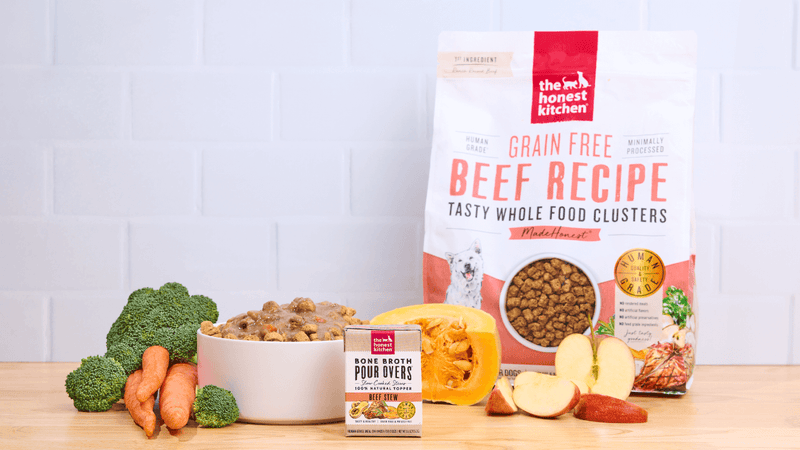
Wholemade Dehydrated meals start with whole ingredients (real proteins, vegetables, and grains) and gently dehydrated them, without the extreme heat of extrusion. Nutrients stay more intact at the ingredient level. When you add warm water before serving, the meal rehydrates into a hearty porridge texture. Even better, it rehydrates to about 4x its dry weight. It's shelf stable, so it fits wherever kibble fits: your pantry, your travel bag, your routine. And most importantly, it's human grade.
Clusters are gently cooked from whole ingredients and are certified human grade. They look like dry food and work like dry food (you scoop, you serve) but the sourcing and processing put them in a genuinely different category.
And if you want to start even smaller: a topper or a bone broth over your dog's current meals introduces whole-food nutrition without changing anything else.
When Do Vets Recommend Whole Food Diets for Dogs?
Vets are most likely to suggest fresh or minimally processed diets for dogs with food sensitivities, chronic digestive issues, skin irritation tied to diet, persistent picky eating, or low appetite. Whole-food diets also appear in supervised elimination protocols, where a simple, controlled ingredient list helps identify what a dog is reacting to.
Not every dog needs the same approach, though. Puppies have precise growth requirements. Dogs with kidney disease often need condition-specific therapeutic diets. Immunocompromised dogs need extra care and caution.
A conversation with your vet before making a significant routine change is always worth having.
What Happens When Dogs Actually Eat Better
The real-world outcomes align closely with what the digestibility research predicts. And they show up fast — most pet parents notice changes within the first few weeks.
That's actually how The Honest Kitchen began. In 2002, Lucy Postins was searching for a way to help her Rhodesian Ridgeback, Mosi, whose chronic ear infections wouldn't clear up no matter what she tried. When she started making him whole food meals in her San Diego kitchen, the transformation was hard to miss. His infections resolved, and his whole body seemed to thank her for it. Two decades later, pet parents keep reporting the same kind of turnaround.
According to an internal survey of THK customers:
- 80% reported improved digestionafter switching
- 77% saw improved energy levels
- 71% reported improvements in skin and coat condition
These aren't just numbers. When a dog's body can actually absorb what it's eating, you can see it. In the bowl after mealtime. On the couch in the afternoon. And every single time you brush their coat.
Summary: Why Upgrade Your Dog's Food?
Digestion improves. Dogs eating human grade whole-food diets produce up to 66% less fecal output, a direct measure of how much more of the food is being absorbed.
Coat, skin, and energy respond.
Processing is the variable that matters most. Whole ingredients, minimal heat, intact nutrients: that's what drives the difference, regardless of format.
Human grade sets a high standard. It's a regulated term that means every ingredient and every facility meets human food requirements, not just a label claim.
You can find a food that works for you and your pup without the fridge space and constant ordering. Dehydrated meals, Clusters, toppers, and broths deliver whole-food nutrition that's shelf stable, convenient, and available online and at retailers nationwide.
Take the product quiz to find the right fit for your dog's size, life stage, and needs.
Frequently Asked Questions
How do I switch my dog to new food without upsetting their stomach?
Transition gradually over 7 to 10 days, starting with about 25% new food mixed into the current meal and increasing the ratio every few days. A slow transition gives the gut time to adjust. Rehydrating our Wholemade Dehydrated meals with warm water also adds moisture that supports digestion during the switch.
Is dehydrated dog food as good as fresh?
Dehydration preserves whole ingredients without the high heat of extrusion, so nutrients stay more intact than in conventional kibble. Once rehydrated with warm water, the texture resembles a hearty porridge. Both our Wholefood Clusters & Wholemade Dehydrated are fully human grade and crafted to put your pets on the path to good health.
What's the easiest way to start feeding my dog whole food?
There are many options for starting out, as intimidating as it can feel. You can try out our Wholemade Dehydrated meals: shelf stable and easy to prepare with warm water. Wholefood Clusters offer a gently cooked dry food option that is fully human grade. If a full switch isn't right for you yet, try a topper or bone broth over your dog's current meals.