Wet vs. Dry vs. Dehydrated Dog Food: Nutrition, Digestibility & Ingredient Quality

Ever stood in the pet food aisle, bag in one hand, can in the other, wondering which one actually does right by your dog? You're not alone. When it comes to wet vs. dry vs. dehydrated dog food, the differences go beyond texture and smell. They shape how much nutrition survives the process, how gently your pup digests it, and whether real, whole food ingredients make the cut. The good news? Once you know what to look for, the choice gets a whole lot clearer. And your dog's tummy will thank you.
At The Honest Kitchen®, we've spent over twenty years making human grade meals from real, whole food ingredients. In fact, we invented the first human grade food for pets back in 2002. Through decades of feeding real dogs real food, we've learned one thing above all: how a meal is made matters just as much as what goes in it.
Here's what we'll walk through together:
- How each food type holds onto (or loses) nutrition
- Which recipes tend to be easiest on your dog's belly
- What ingredient quality really means, beyond the marketing
- How sourcing and human grade standards fit in
- How to match the right food to your dog and your routine
By the end, you'll have a clear framework for comparing your options—and the confidence to pick a meal that fits both your pup and your life.
What does each kind of food have to offer?
The best ingredients in the world can't help your dog if the process cooks the goodness right out of them. A lot of nutrition retention comes down to heat, and how much of it a food endures.
Below, we will walk through three kinds of recipes: what they mean, how they retain nutrients, and what THK has to offer.
Fresh dog food has earned its fans for good reason: lightly cooked, whole food recipes that look like real meals. The catch is logistics. Fresh food needs fridge or freezer space, has a short shelf life once opened, and usually arrives on a delivery schedule you have to plan around. It’s a great option, but it asks a lot of your kitchen and your calendar.
Our Wholemade Dehydrated recipes are gently dehydrated to lock in the nutrition of whole food ingredients, with no fridge required. Just add warm water and watch a homecooked-style meal come together in minutes. They’re human grade, made in a human food facility, and shelf stable, so you can stock up and feed real food on your schedule. And they rehydrate to four times their dry weight. Fresh without the fridge.


Dry food (kibble) is typically made under high heat and pressure. That extrusion process is efficient and shelf-stable, but intense temperatures can diminish some heat-sensitive nutrients—often meaning added synthetic vitamins to top things back up.
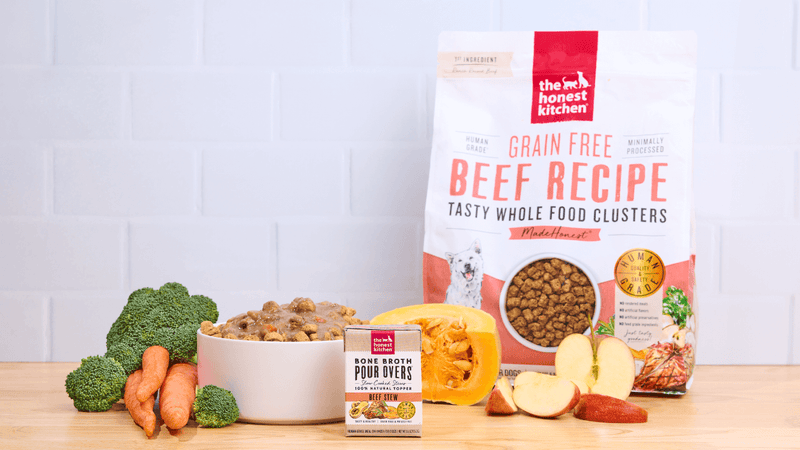
Our Whole Food Clusters take a different path: they’re made with human grade ingredients in a human food facility, then gently cold pressed in small batches. You get real meat, whole grains or grain free options, and fruits and veggies you can actually pronounce, all in a crunchy, scoopable cluster that’s as easy to serve as dry food. It’s the convenience you need with the ingredients you want, and your pup can taste the difference.


Most canned wet food is sealed first and then pressure cooked at high heat right in the can, a process called retorting. Many recipes rely on thickeners like carrageenan and gums to hold their texture, and they’re typically made with feed grade ingredients in pet food facilities. It’s moisture-rich and convenient, but what’s inside isn’t held to the same standards as the food in your own kitchen.
Our Butcher Block Pâté® and One Pot Stews are kettle cooked in small batches, a gentler approach that keeps real ingredients looking and tasting like real food. They’re human grade, made in a human food facility, and free of carrageenan and gums. Hearty, moisture-rich, and genuinely droolworthy. Because if you wouldn’t eat it, neither should your pup.


In a customer poll, 80% reported digestion benefits and 77% reported improved well-being after switching to human grade food. (Customer poll; individual results not guaranteed.)
Ingredient Quality: Human Grade vs. Feed Grade
This is the difference that changes everything—and most pet parents have never heard the terms. There are two quality standards in pet food, and they're worlds apart.
Feed grade is the standard most pet food is held to. It can include by-products and so-called 4D meats—ingredients that would never pass muster for people.
Human grade means every ingredient, and the facility itself, meets the same standards as human food. For a food to make the claim that it’s human grade, it must meet all of the 100+ safety standards set by the Food and Drug Administration and U.S. Department of Agriculture. This does not simply mean the ingredients are safe for human consumption: It also means that they remain safe throughout the entirety of production, from the farm to the manufacturing facility, through the transportation process — all the way to the point when you purchase it in the store. In other words, the food is fully human edible from start to finish.

Our collection of complete and balanced meals is 100% Human Grade Complete & Balanced for Pets. That said, human grade means that the food is safe for humans, but it is crafted with your pet's nutritional needs in mind—not yours.
Try this: Check for a Human Grade seal on the food. Flip any bag or can over and read the first five ingredients. Recognize them as real food? You're on the right track. Reading a chemistry set? Keep looking.
Sourcing and Standards: Where It All Starts
Great meals start long before the kitchen. Where ingredients come from tells you a lot about what you're really feeding.
We source 91% of our ingredients from North America, use non-GMO ingredients only, and back it up with third-party certifications:
- Non-GMO Project verified ingredients
- MSC certification for responsibly sourced seafood
- American Humane certification
Our meals are vet-trusted and Made in the USA with US and globally sourced ingredients. We've also completed and exceeded AAFCO feeding trials—proof that whole food nutrition can stand up to the science. As a Certified B Corporation, we're held to high standards for both quality and impact.
How to Choose (and Switch) Without the Stress
Feeding your dog well shouldn't feel like a science exam. Start with three simple questions: What does my pup's digestion need? How much convenience do I want? How much does ingredient traceability matter to me?
- Match format to lifestyle: wet for hydration and palatability, dry for grab-and-go convenience, dehydrated for whole-food balance without the fridge.
- Check labels: real meat named first, minimal fillers, clear sourcing language.
- Transition slowly: mix in increasing amounts of the new food over 7–10 days, watching energy and stool along the way.
Conclusion: Choosing the Right Bowl
So where does that leave you and your pup? Here's the short version on wet vs. dry vs. dehydrated dog food:
- Nutrition: Gentle, low-heat methods like dehydration help preserve whole food goodness.
- Digestibility: Whole ingredients and added moisture tend to be kinder to bellies.
- Ingredient quality: Human grade translates to higher standards in ingredient quality and production processes.
Whether you reach for dehydrated, dry, or wet, choosing real, human grade food is a win.
Want some guidance on which recipe is right for you and your pup. Take our product quiz below.
Frequently Asked Questions
Is dehydrated dog food better than dry kibble?
Wholemade Dehydrated food is gently dried at low temperatures, which helps preserve more of the whole food nutrition that high-heat extrusion can diminish. When you rehydrate it, you also add moisture back at the bowl—something traditional dry kibble doesn't offer—while still being shelf stable. That said, "better" depends on your dog and your routine. If you love the convenience of dry, a human grade option like our Clusters Dry Dog Food gives you a crunchy alternative. It merely depends on what your dog likes.
Can I mix wet, dry, and dehydrated foods together?
Absolutely. Many pet parents combine recipes—say, a scoop of Clusters over a bowl of Wholemade Dehydrated, and so on. Mixing can boost palatability, add moisture, and make mealtime more exciting. We also have a collection of Toppers and Pour overs to choose from: some being functional and others mostly focused on flavor. Just introduce any new food gradually over 7–10 days and keep an eye on your pup's digestion.
What does "human grade" actually mean?
Human grade means every ingredient—and the facility that makes the food—meets the same standards as food made for people. It's a legally defined term, not just marketing. Feed grade, by contrast, is the standard most pet food follows and can include by-products and 4D meats. Human grade is about quality and safety, though it's still formulated for dogs, not an invitation to share your dinner.
How much dehydrated food does one box make?
A 10 lb box turns into roughly 40 lb of food after you add warm water—just wait about three minutes and it's ready to serve. No refrigeration needed.
How do I switch my dog to a new food without upsetting their stomach?
Go slow. Over 7–10 days, gradually mix in increasing amounts of the new food while decreasing the old. Watch your pup's stool quality and energy along the way. If your dog has a sensitive belly, rehydrating a small serving can help ease the transition—and a supplement like Perfect Form® may offer extra digestive support. When in doubt, your vet is a great resource.