Guide to Puppy Feeding: Schedules, Portions, and Nutrients That Matter

You just brought home a new puppy. The breeder or rescue sent them off with one kind of food, but you have a different plan for those meals. Good news: switching your pup to a new food is simple, and pairing it with a consistent feeding schedule helps your adorable growing companion get every nutrient they need.
Here's the short answer: puppies 6–12 weeks old do best with 3–4 small meals a day, dropping to 3 meals at 3–6 months, then 2 meals a day by their first birthday. Portions start with the feeding chart on the label, then adjust to your puppy's body condition. And the right food is one formulated to meet AAFCO nutritional standards for growth, made from ingredients you can actually recognize.
The rest of this guide walks you through each piece, so mealtime feels less like guesswork and more like the happiest part of your day. Because it should be.
Why Trust The Honest Kitchen With Your Puppy's First Meals
The Honest Kitchen created the world's first human grade pet food, founded in 2002 by Lucy Postins in her San Diego kitchen. Every recipe is made in a human food facility that meets more than 100 FDA and USDA safety standards, from whole, recognizable ingredients you'd feel good eating yourself. We're B Corp certified, vet recommended, and we've spent over two decades learning one thing from veterinarians and pet parents alike: great nutrition doesn't have to be complicated. It just has to be honest, and it has to be consistent.
How Often Should You Feed a Puppy?
A consistent schedule does more than fill bellies. It steadies digestion, supports house-training, and builds trust. Young puppies have small tummies and big energy needs, so frequent, smaller meals help keep digestion smooth and blood sugar steady. Puppies thrive on routine, so aim to feed at the same times each day.
Here's a general roadmap by age:
- 6–12 weeks: Feed 3–4 small meals daily. Tiny tummies empty quickly and need frequent fuel.
- 3–6 months: Transition to 3 meals a day, spaced roughly evenly through your pup's waking hours.
- 6–12 months: Shift to 2 meals daily, morning and evening, as growth begins to slow.
- 12 months and beyond: Most dogs settle comfortably into twice-daily feeding.
Offer the last meal a few hours before bedtime to make overnight potty breaks easier, and use feedings as training moments. Your pup learns fastest when good things are on the line. Always check with your veterinarian, too, since breed and expected adult size can shift these timelines, especially for large and giant breeds.
How Much Should a Puppy Eat?
Right-sized portions keep your puppy energized without tipping into overfeeding. Growing pups need more calories per pound than adult dogs, but "more" still has limits. Portioning is more art than science. Start with a baseline, then let your puppy's body guide you. In other words: feed the puppy in front of you, not the number on the bag.
Use these guideposts:
- Start with the label. Feeding charts base amounts on your pup's current weight and expected adult size.
- Divide the daily total. Split the recommended amount across the number of meals your puppy needs that week.
- Watch the body, not just the bowl. You should feel ribs easily without seeing them, and spot a gentle waist tuck from above.
- Adjust as they grow. Reweigh regularly and nudge portions up or down by 5–10% every few weeks.
Other signs you're on track: energetic play without post-meal sluggishness, and firm, regular stools. For extra precision, measure meals with a kitchen scale for two weeks to learn your pup's true intake, then switch to a scoop with confidence.
What Nutrients Do Puppies Need to Grow?
The right nutrients turn ordinary meals into building blocks for a strong, resilient dog. Puppies grow at a remarkable pace, so quality truly counts.
Prioritize food that delivers:
- High-quality protein from named meats or fish to support developing muscles and tissue.
- Healthy fats, including DHA, an omega-3 fatty acid associated with brain and eye development.
- Balanced calcium and phosphorus for steady bone growth, especially important for large breed puppies.
- Wholesome carbohydrates and fiber for energy and gentle digestion.
Look for food formulated to meet AAFCO (Association of American Feed Control Officials) nutrient profiles for growth or all life stages. That simple line on the label confirms the recipe is designed to support puppies, not just adult maintenance. When protein comes first on the ingredient list and you can pronounce what follows, you're on the right track. Check out our guide to puppy nutrition here.
What Should You Look for in Puppy Food?
The best puppy food makes you feel good about every scoop. That's where human grade, minimally processed options shine, because what's left out matters as much as what's included.
When comparing choices, favor food that is:
- Made from whole, named ingredients you'd recognize in your own kitchen
- Free from artificial preservatives, colors, and by-products
- Transparent about sourcing and how it's made
- Easy to portion and prepare consistently
This is where our Wholemade Dehydrated recipes make life simpler. They're human grade: whole food ingredients, minimally processed to keep nutrients intact. Measure the dry food, add warm water, and in about three minutes it rehydrates to roughly four times its dry weight, turning a small scoop into a full, fresh, nutrient-dense meal. Because these recipes are so nutrient-dense, you typically feed less by volume than you'd expect, so portioning stays precise, prep stays quick, and quality never gets sacrificed for convenience. In a survey of Honest Kitchen customers, 80% reported improved digestion and 77% reported improved energy.
Our Wholemade dehydrated puppy food is crafted to support brain & eye development, digestion, skin & coat, immunity, joint development and healthy growth for dogs of all breeds and sizes, including large breed dogs. Use this shelf-stable recipe as a full meal or topper to give your growing puppy a healthy start.
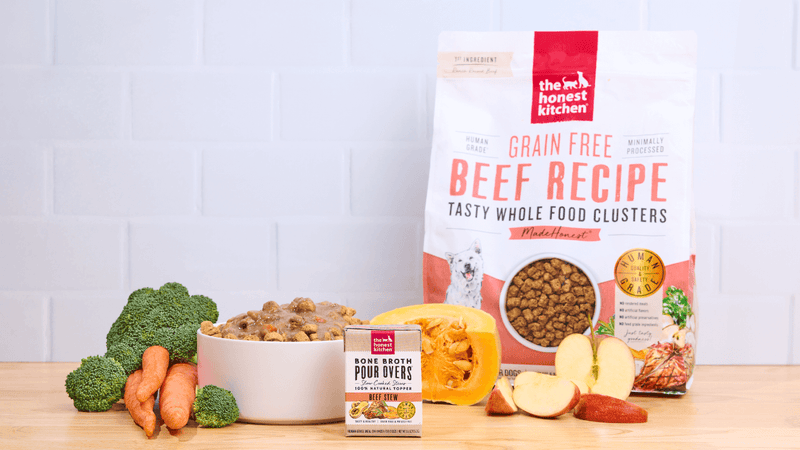
Then there's our Clusters: for pet parents who want the ease of kibble without the feed grade shortcuts. Each batch is gently baked in small batches from whole food ingredients you can actually recognize: things like chicken, oats, and organic coconut, not "meal" or mystery by-products. Just scoop, pour, and serve—no prep, no water, no extra dishes. It's proof that quick and quality aren't opposites: same human grade standards as our dehydrated recipes, just built for the mornings when three minutes still feels like too many.
And for puppy parents, these golden Whole Food Clusters have enhanced protein for muscle development, DHA for brain health, and probiotics for digestion. Serve as a main meal, pair with a topper, or use them as tasty training treats.
Try this: pre-measure your puppy's daily dehydrated portion in the morning, then rehydrate meal by meal. And when switching foods, blend new with old over 7–10 days to keep tummies settled. Both habits take the mental math out of dinnertime.
Puppy Feeding FAQs
When should I switch my puppy to adult food?
Most puppies transition to adult food around 12 months. Large breeds often benefit from growth-formulated food until 12–18 months, and giant breeds sometimes up to 24 months. Recipes formulated for all life stages can carry your pup from puppyhood through adulthood without a switch. Your veterinarian can help you time it for your pup's breed and growth rate.
Can puppies eat dehydrated food?
Yes, as long as the recipe meets AAFCO nutrient profiles for growth or all life stages. Rehydrated meals are gentle on developing tummies, and the added moisture supports healthy hydration.
How do I know if I'm overfeeding my puppy?
Watch for ribs you have to press to find, a rounder belly with no visible waistline, soft stools, or a pup who naps hard right after eating. If a few of these show up together, trim portions slightly and reassess in a couple of weeks. Your vet can confirm with a body condition score at your next visit.
Should I leave food out for my puppy all day?
Scheduled meals beat free feeding for most puppies. Set mealtimes make house-training more predictable, help you spot appetite changes early, and keep portions consistent.
Bringing It All Together for a Thriving Puppy
Feeding your puppy well doesn't require a nutrition degree. Just a clear plan and a little consistency. Remember the essentials:
- Match feeding frequency to your pup's age, easing from 3–4 meals down to twice daily.
- Size portions to your puppy's growth and body condition, not the bag alone.
- Choose food rich in quality protein, DHA, and balanced minerals.
- Lean on simple, human grade options to keep prep easy and honest.
These first months fly by faster than you'd believe, and the habits you build now shape a lifetime of health. Start this week by measuring a few days of feedings with a kitchen scale, then try swapping one meal for a Wholemade Dehydrated option and watch how your pup responds. Ready to see the honest difference in the bowl?
Explore our Wholemade Dehydrated recipes formulated for all life stages, including growing puppies.