Why Do Dog Foods Add Probiotics for Digestion? From Microbiome to Mealtime

Dog gut health depends on two things working together: a balanced microbiome of beneficial bacteria and the quality of the food that supports it. Probiotics, live microorganisms like Lactobacillus acidophilus and Enterococcus faecium, help regulate digestion, stool consistency, and immune function, but they work best when delivered through real, whole-food nutrition rather than heavily processed food. This guide covers what your dog's gut actually does, which probiotic strains have the strongest clinical support, how to read a probiotic label (CFU count, strain name, viability guarantee), and when a faster-acting herbal supplement like The Honest Kitchen's Perfect Form makes sense.
If you've ever given your dog a belly rub after dinner and felt a low, rolling gurgle somewhere deep in their abdomen, you've met the question firsthand. Or maybe your dog eats on schedule, never skips a meal, but still seems gassy, dull, or just slightly off in ways you can't name. That gap between "they're eating fine" and "something doesn't feel right" is one of the most common things pet parents bring up, and it almost always traces back to what's happening in the gut.
What's happening in the gut, it turns out, is a lot.
What Is Your Dog's Gut Actually Doing Every Day?
The canine gut is home to hundreds of billions of bacteria and microorganisms, a living community that does far more than break down food. It helps regulate immune response, influences energy and mood, controls how well nutrients are absorbed, and keeps the intestinal lining intact. It's one of the most active systems in your dog's body, and it's doing all of this quietly, every day, whether us humans are paying attention or not.
A healthy gut is defined by diversity and balance: a rich mix of beneficial bacteria that keeps harmful strains in check. When that balance tips (from stress, antibiotics, a rapid diet change, or simply a long stretch of low-quality food) the effects show up in ways that are easy to miss. Loose or inconsistent stools. Excessive gas. Frequent grass-eating. A dull coat. Low energy after meals. A suddenly picky appetite in a dog that used to eat anything. These aren't proof of a gut problem on their own, but they're worth paying attention to. Any symptoms that persist deserve a vet visit.
The good news is that gut balance is also something healthy dog food can actively support, and that's exactly why probiotics have become one of the more meaningful additions to a quality food routine. If your dog is already showing symptoms, the gut-building nutrition section below is a great place to start.
What Do Probiotics Actually Do in Your Dog's Gut?
Probiotics are live beneficial microorganisms that, when delivered in sufficient quantities, provide a measurable health benefit.
When the right strains take up residence in the gut, they compete with harmful bacteria for space and nutrients, help regulate stool consistency, and produce compounds that feed the intestinal lining. If you've ever wondered why one dog thrives on a probiotic-rich diet while another stays gassy and irregular, strain selection is usually where the answer lives. Here are some strains to look for:
- Lactobacillus acidophilus, one of the most common strains in both pet and human supplements, studied in connection with stool quality and nutrient absorption
- Lactobacillus casei, frequently paired with L. acidophilus and studied for its role in maintaining overall gut balance
The key word in all of this is strain-specific. A vague "probiotic blend" on a label doesn't carry the same weight as named strains with a confirmed CFU count (that's colony-forming units, a measure of how many live bacteria are actually in each serving). More on how to read that label as you scroll.
Does the Food Itself Matter for Probiotics to Work?
Here's what often gets left out of the probiotic conversation: probiotics don't work all by themselves. The quality of the food carrying them determines whether they thrive, survive, or get overwhelmed before they do anything useful.
A diet high in fillers, synthetic additives, or poor-quality protein creates a gut environment that actively works against beneficial bacteria. Real, whole-food ingredients provide the foundation that beneficial bacteria need to establish and do their job. Ingredient quality and probiotic efficacy are genuinely difficult to separate.
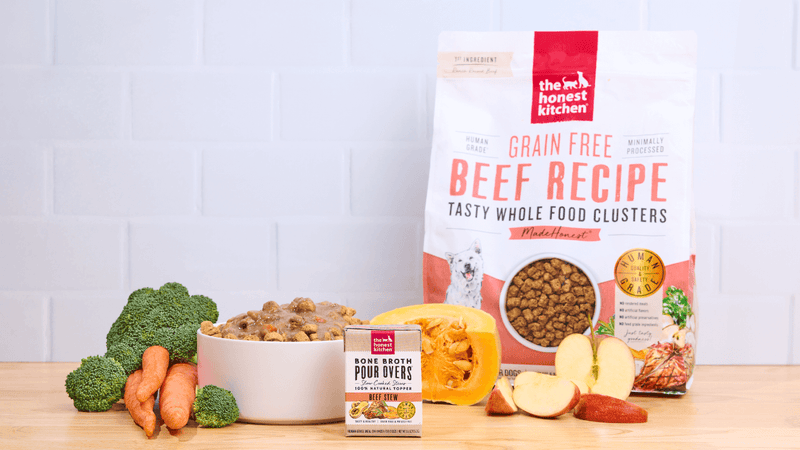
It's why The Honest Kitchen became the first human grade dog food brand. Our recipes are held to the same standards as your food. That human grade foundation gives probiotics a cleaner environment to work with from the first bowl.
How Do You Add Probiotic Support to Any Bowl?
Instant Goat's Milk Plus is The Honest Kitchen's go-to probiotic addition. Just add warm water to the powder and you're delivering 1.25 billion active probiotics and digestive enzymes in every serving. Use it as a daily topper over any meal, mix it with dehydrated food, or freeze it into a treat for enrichment. It's flexible enough to fit however your dog eats, and it works especially well as part of a whole-food, healthy dog food routine.
For snack time, Goat's Milk N' Cookies come in a few varieties, made with real goat's milk and wholesome ingredients. They're a probiotic-packed snack that supports digestion every time you reach for the treat bag. More than a reward. A quiet, daily contribution to gut health.
Sometimes the gut needs help faster than probiotics can provide it. Probiotics work by gradually establishing beneficial bacteria over days and weeks, but if your dog's tummy is already upset, whether from environmental stress, a little dietary indiscretion (we've all watched a dog inhale something off the sidewalk), or transitioning to a new food, Perfect Form is a fast-acting route. This herbal supplement blends slippery elm, fennel, and plantain to help soothe and protect the GI tract and reduce loose stools while the gut resets. It's especially useful during food transitions, when even the best switch can temporarily throw things off. Think of it this way: probiotics build the gut up over time, and Perfect Form calms it down in the moment. Plenty of pet parents keep both on hand.
How Do You Know If a Probiotic Label Claim Is Real?
Three things separate a meaningful probiotic claim from label decoration, and knowing them is the same label literacy you'd bring to your own nutrition label.
CFU count. Colony-forming units measure how many live bacteria are present per serving. For routine digestive maintenance, 1–5 billion CFU is the most commonly cited daily threshold in veterinary nutrition guidance. Dogs recovering from antibiotics or managing a GI condition may benefit from more, which is best calibrated with your vet.
Full strain name. The strain should appear by genus and species, like Lactobacillus acidophilus, not "beneficial bacteria" or "proprietary probiotic blend." A named strain is something you can research. A proprietary blend is not.
So Where Do You Start?
That dog on the living room floor with the gurgling belly is telling you something worth hearing. Dog gut health isn't a niche wellness topic; it touches immune function, coat quality, energy, and stool consistency all at once. And what your dog eats every day can support all of that.
Healthy dog food doesn't just fill the bowl. It builds the foundation that makes everything else (including probiotics) actually work. Real ingredients give beneficial bacteria a place to establish and thrive. The right strains and CFU counts fine-tune that support based on your dog's age, health history, and needs. Neither one does the job as well without the other.
Start with the food. Add the function. Pay attention to what changes.
Our human grade Complete and Balanced recipes include Wholemade Dehydrated and Clusters with various recipe options for your dog's individual needs.
Frequently Asked Questions
What are the best probiotic strains for dog digestion?
The best probiotic strains for dog digestion are Lactobacillus acidophilus (stool quality, nutrient absorption), Enterococcus faecium (diarrhea recovery), Bifidobacterium animalis AHC7 (GI inflammation in sensitive dogs), and Bacillus coagulans (heat-stable; consistent stool quality). When evaluating any healthy dog food or supplement, look for products that name the exact strains, not just "probiotic blend," and confirm a CFU count guaranteed at expiration.
Do probiotics in dog food actually work?
Probiotics in dog food do work, when delivered in sufficient quantities from the right strains. The key variables are CFU count, strain specificity, and viability at the time your dog eats. Products that apply probiotics post-processing or use heat-stable strains are generally more reliable. And the quality of the food they're delivered in matters too: real, whole-food ingredients give beneficial bacteria a better environment to do their job.
What's the difference between probiotics, prebiotics, and postbiotics?
Probiotics, prebiotics, and postbiotics each play a different role in dog gut health. Probiotics are live beneficial microorganisms added directly to the gut. Prebiotics are dietary fibers that feed the beneficial bacteria already living there. Postbiotics are the beneficial compounds those bacteria produce, like short-chain fatty acids that nourish the intestinal lining. All three show up in quality healthy dog food recipes, but probiotics are the only ones actively introducing new organisms to the microbiome.
What helps a dog's upset tummy faster than probiotics?
Herbal digestive supplements work faster than probiotics for acute digestive upset. Probiotics build gut balance gradually over days and weeks, while herbs like slippery elm, fennel, and plantain help soothe and protect the GI tract right away. The Honest Kitchen's Perfect Form combines all three to help reduce loose stools caused by environmental stress, dietary indiscretion, or transitioning to a new food, which makes it a practical companion to probiotics rather than a replacement: one calms the gut in the moment, the other builds it up over time.
How do I know if my dog needs more digestive support?
Dogs that need more digestive support often show it through loose or inconsistent stools, excessive gas, frequent grass-eating, a dull coat, low energy after meals, or a sudden drop in appetite. These aren't diagnostic on their own; persistent symptoms always warrant a vet visit, but they're worth connecting to what's happening in the gut. Food routine is often the first place to look.
Can goat's milk support my dog's digestion?
Goat's milk is one of the most effective whole-food ways to support dog digestion. It's a natural source of probiotics, digestive enzymes, and prebiotics that work together to support gut balance. The Honest Kitchen's Instant Goat's Milk Plus delivers 1.25 billion active probiotics and digestive enzymes per serving and is versatile enough to use as a daily topper, mixed with dehydrated food, or frozen into a treat. It's one of the more practical ways to add functional digestive support to a healthy dog food routine.
Are probiotic dog treats actually effective?
Probiotic dog treats can be effective, when made with real, functional ingredients rather than a probiotic claim bolted onto a processed snack. The Honest Kitchen's Goat's Milk N' Cookies are made with real goat's milk and wholesome ingredients. They deliver probiotic support in every treat and work best as part of a whole-food diet.
What should I look for in healthy dog food that supports digestion?
Healthy dog food that genuinely supports digestion should have three things: real, whole-food ingredients (which give beneficial bacteria a better environment to establish), named probiotic strains with a CFU count guaranteed at expiration, and a manufacturing method that accounts for probiotic survival: through post-processing application, heat-stable strains, or microencapsulation. A diet heavy in fillers and synthetic additives actively undermines the probiotics you're trying to add. For a deeper look at what to stock your dog's bowl with, check out our guide to 11 Ingredients in Healthy Dog Foods.