Best Premium Dry Dog Food How to Choose and Where to Buy the Right Brand for Your Dog

Learn how to evaluate premium dry dog food beyond price. Understand human grade vs. feed grade, how manufacturing methods affect nutrition, and what certifications and ingredient transparency actually mean.
Here's a question worth chewing on: is the best premium dry dog food actually premium, or does it just come with a premium price tag? Because "premium" gets slapped on a lot of packaging these days, and it doesn't always mean much. If you've stood in a pet store aisle squinting at labels, wondering what separates the real deal from clever marketing, you're not alone. The good news? Once you know what to look for, the choice gets a whole lot clearer. This guide breaks it down so you can feed with confidence, not confusion.
At The Honest Kitchen®, we've spent 20+ years making human grade pet food from real, whole food ingredients. In fact, we invented the first human grade food for pets back in 2002, and we've been putting pups on the path to good health through good food ever since. Along the way, we've learned that "premium" is less about price and more about what's actually in the bag, how it's made, and whether the brand will tell you the truth about both.
In this post, we'll walk you through:
- What actually makes a dry food premium
- How to read protein sourcing and spot the good stuff
- Why manufacturing standards and ingredient transparency matter
- How format options like clusters and dehydrated recipes change the game
- Where to buy and how to match food to your dog
By the end, you'll have a practical checklist and be able to choose the right food for your dog without second-guessing yourself in the aisle.
What is Dry Dog Food?
Dry dog food typically means kibble. A lot of traditional kibbles use high-heat extrusion, combining proteins, carbs, fats, and nutrients and then removing moisture so it remains fresh at room temperature. This process is fast, but it can strip nutrients, which means a lot of brands spray nutrients back on at the end of the process. However, there are dry dog foods that work to preserve whole food nutrition through gently cooked processes—like clusters, which use cold-pressing and low-temperature roasting instead.
Understanding the difference between these methods matters. One delivers nutrition that's been rebuilt from scratch. The other protects the nutrition that was there to begin with.
What makes premium dog food different from regular kibble?
Let's get to the point: premium isn't a regulated word. So instead of trusting that claim, look at what the food is built from and how honestly the company talks about it.
Truly premium dry food tends to share a few traits. It leads with real, recognizable ingredients. It's clear about where those ingredients come from. And it doesn't lean on cheap fillers to bulk up the bag.
Here's a quick gut-check when you're comparing options:
- Named proteins come first — think chicken, turkey, or salmon, not vague "meat meal"
- Short, readable ingredient lists you can actually pronounce
- Whole foods you recognize, like pumpkin, spinach, or oats
- No mystery by-products or artificial colors
Price can be a signal, but it isn't the be all and end all of good quality food. The real question is whether the quality inside justifies what you're paying, and whether the brand can back it up.
Protein Sourcing: Human Grade vs. Feed Grade
Protein is the heart of your dog's diet, so this is where quality matters most. It's also where one of the biggest divides in pet food hides: human grade versus feed grade.
Most conventional dry food is made with feed grade ingredients. Feed grade allows things you'd never want on your own plate, including by-products and what the industry calls 4D meats. It's legal, and it's common. But it's not the standard most people assume they're getting.
Human grade is a different world entirely. For a food to make the claim that it’s human grade, it must meet all of the 100+ safety standards set by the Food and Drug Administration and U.S. Department of Agriculture. This does not simply mean the ingredients are safe for human consumption: It also means that they remain safe throughout the entirety of production, from the farm to the manufacturing facility, through the transportation process — all the way to the point when you purchase it in the store. In other words, the food is fully human edible from start to finish. To be clear, it's about the caliber of ingredients and safety controls, not an invitation for you to grab a fork on the daily.
More on what human grade really means.
Try This
Manufacturing Standards and Ingredient Transparency
Ingredient quality matters just as much as manufacturing standards.
Some manufacturers rely on high-heat extrusion that can strip nutrients, then add synthetic additives back in to rebalance the final product. Others use gentler methods that protect more of the food's natural goodness. Brands that are proud of their process tend to share it openly. The ones that stay vague? That silence usually says something.
Here's what to look for in a trustworthy maker:
- Clear sourcing claims — like "Made in the USA with US and globally sourced ingredients"
- Meaningful certifications, such as Certified B Corporation, Non-GMO Project, or MSC
- Testing and safety practices the brand is willing to talk about
- Nutritional adequacy confirmed through AAFCO standards or feeding trials
Want to know more about THK sourcing? The Honest Kitchen sources Marine Stewardship Council Certified fish to ensure sustainable fishing practices, and partners with American Humane Certified chicken suppliers, confirming the birds were raised with genuine welfare standards. Non-GMO verification goes further, with 100% of produce used meeting strict standards. As a B Corp Certified company, The Honest Kitchen sources approximately 87% of ingredients from North America when possible, reducing transportation time and supporting better traceability from farm to facility. When a brand openly shares these details, the certifications, the sourcing map, the manufacturing standards, that translates to confidence.
The bottom line? A premium brand invites your questions instead of dodging them.
Recipe Options: Why Clusters Beat Conventional Kibble
Here's where premium dry food gets genuinely interesting. Because dry doesn't have to mean ordinary kibble. Recipe matters more than most pet parents realize, since how food is made affects digestion, nutrition, and how excited your dog is to dig in.
Traditional kibble is convenient and shelf-stable, but it's typically cooked at very high heat, which is efficient but can be tough on delicate nutrients.
What Makes Whole Food Clusters Different?
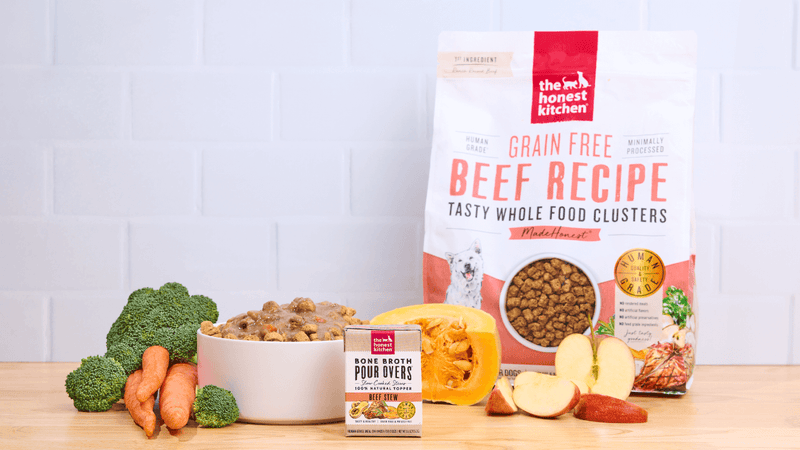
Our Clusters are made using our MadeHonest ® process, first mixing whole foods in small batches, then cold pressing into clusters. Each cluster is then slow roasted and gently dehydrated to protect the nutrients, keeping the food vibrant, colorful and less processed than conventional kibble that’s extruded at high temperatures. This method keeps beneficial antioxidants from ingredients like kale, pumpkin and carrots in each bite-sized cluster.
The result is a nutritious bowl of whole food in a convenient dry format your dog gets excited about. They're often easier on tummies, too, and work as a full meal or a topper.
Clusters come in options to fit you and your pup's needs:
- Essential Clusters are packed with quality protein, healthy whole grains and the essential vitamins and minerals your dog needs to thrive. These clusters make it easy to serve your dog a human grade meal.
- Whole Food Clusters in Whole Grain and Grain Free recipes: See and smell the real food ingredients in every golden, roasted bite of our Whole Food Clusters. Crafted with a vet nutritionist, serve this healthy dry food as their main meal, paired with a topper or use them as tasty training treats.
- Puppy Whole Food Clusters, for the growing crew. The first human grade dry food for puppies, crafted dogs of all sizes – small, medium and large breeds. Packed with real, recognizable ingredients and less processed than traditional kibble, these bite-sized clusters help support growing pups.
- Small Breed Whole Food Clusters, expertly crafted for smaller pups. Made with real, recognizable ingredients and less processed than traditional kibble to preserve flavor and nutrition.
- Protein Plus Clusters are the first human grade, high protein dry dog food. Crafted with thoughtfully sourced protein and probiotics, plus added health benefits to help support your dog's overall health and well-being.
Prefer to add water? Our Wholemade Dehydrated recipes are another step above the norm. We concentrate the benefits of fresh, homemade food—real ingredients, minimal processing & serious nutrition—into every box. Whole ingredients are dehydrated slowly to remove water while keeping nutrition intact. You add warm water, wait about three minutes, and dinner's served—warm, fragrant, and close to a fresh meal.Just add warm water, wait three minutes, and a 10 lb box makes roughly 40 lb of food. That's quite a bang for your buck. We call it Fresh Made Easy, and honestly, it lives up to the name.
Try This
Where to Buy and How to Match Food to Your Dog
Online vs. Retail
- Independent Local Pet Shops: Local specialty pet stores curate premium, human grade options and staff who actually know their products. They'll help you test smaller quantities before committing to a full-size box, and you'll walk out with recommendations from people who've seen what works for different dogs.
- Direct from The Honest Kitchen: Browse our complete recipe lineup at thehonestkitchen.com with the full range of formats, flexible shipping choices, and subscription discounts. Our 90-day satisfaction guarantee means you can try any recipe without risk. Start with a single box of dehydrated food—just add warm water, wait a few minutes, and see how seamlessly it fits into your feeding routine. We're only happy if your pup is too.
- Petco, Petsmart, Pet Supplies Plus & Other National Retailers: Shop multiple recipes in a single trip and compare your options side by side. You can examine packaging, check dates, and ask staff which formats might suit your dog's specific needs.
- Chewy, Amazon & Other Online Retailers: Compare different formats, read what other pet parents have experienced, and set up automatic deliveries. Ideal once you've found your dog's favorite and want to keep it in steady supply.
There's no wrong answer here. Pick whatever keeps your pup's bowl consistently full without adding stress to your week.
Use Our Quiz to Find the Right Fit
Every dog is different, and matching food to your specific pup is where the magic happens. That's exactly what product quizzes are for.
Try this: before you buy, take a quick product quiz and have these details handy:
- Your dog's age, breed size, and weight
- Activity level and ideal body condition
- Any sensitivities, like a fussy tummy or itchy skin
- Texture and format preferences (Clusters, dehydrated, or a mix)
And if you still want some extra guidance, book a 15 minute consultation with one of our HonestExperts for a real conversation. They can help you find the right recipe and routine.
Your Best Premium Dry Dog Food Checklist, Wrapped Up
Choosing the best premium dry dog food doesn't have to feel overwhelming. When you know what to look for, the marketing hype fades and the real quality stands out.
Keep these takeaways in your back pocket:
- Premium is about ingredients and honesty, not just price
- Human grade beats feed grade when it comes to protein sourcing, nutrition, and quality
- Transparency and real manufacturing standards signal a brand you can trust
- Clusters and Dehydrated recipes offer a smarter, more nutritious format than ordinary kibble
- Our product quiz matches food to your dog's actual needs
Ready to check your current food? Flip the bag over and read the first three ingredients. Do they match what you're looking for in a premium dry food? If you want to try something different, there's no better time.
FAQ
What makes premium dog food different from regular kibble?
For a food to make the claim that it’s human grade, it must meet all of the 100+ safety standards set by the Food and Drug Administration and U.S. Department of Agriculture. This does not simply mean the ingredients are safe for human consumption: It also means that they remain safe throughout the entirety of production, from the farm to the manufacturing facility, through the transportation process — all the way to the point when you purchase it in the store. In other words, the food is fully human edible from start to finish.
Why would I pay more for clusters instead of regular kibble?
Traditional kibble is made with high-heat extrusion, which strips nutrients that brands then spray back on synthetically. Clusters use cold-pressing and low-temperature roasting to preserve the nutrition that's already there. You're paying for a smarter process that keeps whole food, human grade nutrition intact instead of rebuilding it from scratch.
How do I know if a brand is actually premium and not just expensive?
Look for four things: named, specific proteins (not "meat meal"), short ingredient lists you can actually read, clear sourcing claims, and meaningful certifications like B Corp, Non-GMO, or Marine Stewardship Council. Premium brands invite your questions. If a company won't tell you how it sources ingredients or makes its food, that's a red flag.
How long does it take to transition my dog to a new food?
Start by mixing a small amount of the new food with your dog's current food. Over about two weeks, gradually increase the new food while decreasing the old. Watch appetite, stool quality, and energy levels. This slow transition helps avoid digestive upset and lets you see how your dog actually responds to the new food. Check out our guide to switching foods.