Healthy Dog Food for Large Dogs: What to Feed a Big Dog (Without Breaking the Bank)

The best affordable dog food for large dogs prioritizes cost per serving — not cost per bag. Human grade foods with named proteins, omega-3 sources like fish oil, and a clear AAFCO nutritional adequacy statement tend to deliver more nutrition per bite, which means your dog eats less to get more. Dehydrated human grade food like The Honest Kitchen's Wholemade™ Dehydrated Dog Food reconstitutes to roughly four times its dry weight, making it one of the most cost-effective whole food options for large breeds.
If you share your home with a 70-plus pound dog, you already know the food bill hits differently. Big dogs eat a lot. And when you're hauling a 30-pound bag of kibble every few weeks, it's tempting to just grab whatever looks reasonable and call it done.
But here's the number that can make a dent: cost per serving. Not cost per bag. Once you run that math, the whole conversation about "affordable" dog food shifts.
If you share your home with a 70-plus pound dog, you already know the food bill hits differently. Big dogs eat a lot. And when you're hauling a 30-pound bag of kibble every few weeks, it's tempting to just grab whatever looks reasonable and call it done.
But here's the number that can make a dent: cost per serving. Not cost per bag. Once you run that math, the whole conversation about "affordable" dog food shifts.
Big Dogs Have Big Nutritional Jobs
Big dogs aren't just bigger versions of small dogs — their nutritional needs scale up too. Muscle mass, joint health, bone development, calorie density: the bigger your dog, the more those details actually matter in the bowl.
The first thing to look for on any label is the protein source. Named proteins like chicken, beef, turkey, and salmon should lead the ingredient list. Real, identifiable food — not mystery meal, not unnamed by-products. Whole food proteins are more digestible, which means your dog actually absorbs more of what they're eating.
Joint health is the other big one. Dogs over 50 pounds put daily stress on their joints, and that adds up over years. Omega-3 fatty acids from fish oil or salmon oil have solid research behind them for joint support. And keeping your dog lean matters just as much as any ingredient. Extra poundage is extra wear on joints that are already doing a big job.
For minerals, AAFCO recommends a calcium-to-phosphorus ratio between 1:1 and 2:1 for adult dogs. This is especially important for large breed puppies, where too much calcium during skeletal development can cause real bone problems. Whole food ingredient bases tend to deliver minerals in more naturally balanced proportions than heavily supplemented recipes.
Cheap Kibble Isn't Always the Cheaper Option
This is the part that surprises a lot of people. Lower quality kibble loaded with corn, wheat, and unnamed fillers can actually cost more over time. When food is nutritionally thin, dogs need higher daily volumes just to meet their actual needs. You go through bags faster. You're paying for filler, not nutrition.
Fresh food delivery solves the quality problem but creates a new one. For a dog between 70 and 100 pounds, those monthly costs stack up. That's hard to sustain.
Dehydrated human grade food sits in a different category entirely. The sticker price looks higher than kibble until you account for how much food you get once you add water. A 10 lb box of The Honest Kitchen's dehydrated food yields approximately 40 lbs of hydrated food. No freezer space required. No subscription. Available at 9,000-plus retail stores and online on our website, Amazon, and Chewy, so you have plenty of options in case you run out.
What a Good Label Actually Looks Like
You don't need a nutrition degree to read a dog food label well. The honest version of a great ingredient list looks something like this:
A named whole protein first
Recognizable whole foods throughout (sweet potato, oats, eggs, pumpkin)
A named omega-3 source like fish oil
A clear AAFCO nutritional adequacy statement for the right life stage
Not sure what you're looking at? Check out some of our tips to navigating an ingredient list.
Bonus points for human grade statements, which translate to human standards being met throughout the entire production process — from ingredients to the bowl.
On the flip side, a few things are worth walking away from:
Generic "meat meal" or "by-products" with no named species
Corn or wheat as the first or second ingredient
Artificial preservatives like BHA or BHT
Artificial colors
The Recipes Worth Knowing for Large Breeds
For large breed pet parents who want the best value on ingredient quality, a few options stand out.
Wholemade Dehydrated is a complete and balanced meal option made with whole, human grade ingredients and named proteins including chicken, turkey, beef, and fish. The Wholemade Whole Grain Chicken recipe is AAFCO approved for all life stages, including large breed puppies. The Wholemade Whole Grain Beef & Oat recipe is a great fit for adult and senior large breeds, especially those focused on healthy weight maintenance—which, again, is one of the most effective things you can do for long-term joint health.
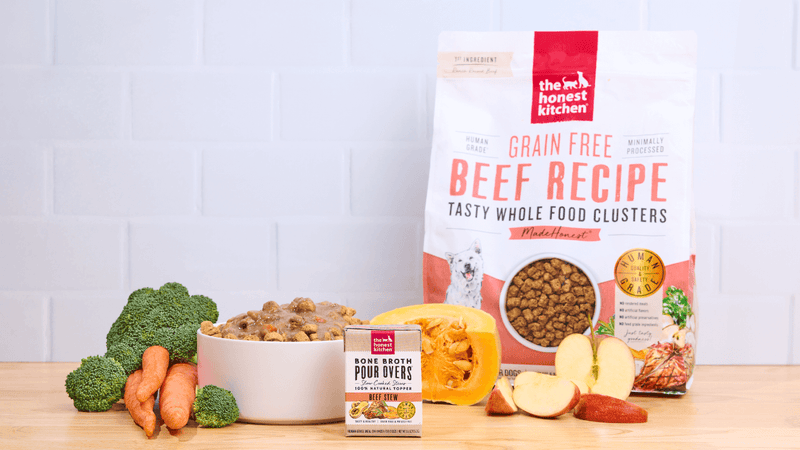
Clusters are a gently cooked dry option, also made with human grade ingredients. Real proteins, no synthetic fillers, and a pour-and-serve simplicity that works for busy households. Think of it as what kibble would look like if it were made with actual food. (Because it is.)
For large breeds specifically, the Functional Pour Overs: Hip & Joint - Chicken Stew includes nutrients—like fish oil with omegas, DHA, and EPA—to help reduce inflammation and support joint health over time. It's easy to add as a tasty and supportive topper. And if a full switch isn't where you're starting right now, THK toppers and bone broths are the most practical way to close nutritional gaps without changing everything at once.
The Bottom Line Is Pretty Simple
Affordable and high quality aren't opposites. For big dogs, the real measure is daily feeding cost and nutritional density — not the number on the front of a bag. When you run those numbers honestly, whole food feeding becomes a lot more accessible than it looks at first glance.
Knowing what's in your dog's bowl is the simplest investment you can make in their long-term health.
Find the right recipe for your dog at TheHonestKitchen.com, or take our product quiz to match by size, life stage, and health needs.
Frequently Asked Questions
What is the healthiest dog food for large breeds?
The healthiest dog food for large breeds starts with a named whole protein (like chicken, beef, or salmon) at the top of the ingredient list, includes an omega-3 source for joint support, and carries an AAFCO nutritional adequacy statement for the right life stage. Human grade food — made under the same standards as food produced for people — takes it a step further, ensuring every ingredient meets higher safety and quality benchmarks. The Honest Kitchen's Wholemade Dehydrated and Clusters lines are both made with human grade ingredients and formulated to meet large breed nutritional needs.
Is affordable dog food good for large dogs?
It can be — but "affordable" needs to be measured per serving, not per bag. A low-cost kibble with corn, wheat, or unnamed fillers as primary ingredients often requires higher daily feeding volumes to meet your dog's nutritional needs, which drives up your actual cost over time. Whole food options like dehydrated human grade food can look more expensive upfront but deliver more nutrition per bite, often making them more economical when you do the math. For large breeds, nutritional density matters more than sticker price.
How much should I feed a large breed dog per day?
Daily feeding amounts for large breeds vary based on weight, age, activity level, and the caloric density of the food. Most quality foods include a feeding guide on the packaging — that's always the right place to start. The key difference with nutrient-dense whole food options is that recommended portions tend to be smaller than with heavily padded kibble, because your dog is actually absorbing more from every bite. This is especially true with Wholemade Dehydrated food, which expands when rehydrated. When in doubt, your veterinarian can help you dial in the right amount for your specific dog.
What dog food ingredients should I avoid for large breeds?
For large breed dogs, the ingredients most worth avoiding are unnamed protein sources (like generic "meat meal" or "animal by-products"), corn or wheat as lead ingredients, artificial preservatives like BHA and BHT, and artificial colors. These ingredients add bulk without adding meaningful nutrition — and for a big dog eating sizable portions every day, that adds up fast. For large breed puppies specifically, watch calcium levels: too much during skeletal development can cause bone issues.
Is dehydrated dog food good for large dogs?
Yes, and for large breeds especially, it's one of the more practical whole food options. Dehydration works by gently removing moisture from whole food ingredients, which locks in natural nutrition, aromas, and flavor while keeping the food shelf-stable. No refrigeration, no complicated prep — just add warm water and you've got a meal that delivers the same high-quality nutrition as fresh or homemade food, without the time or cost of cooking from scratch. A 10 lb box of The Honest Kitchen's dehydrated food yields approximately 40 lbs of hydrated food — real value for pet parents feeding a 70-plus pound dog.
Can I mix dog food toppers into my large dog's current food?
Absolutely, and this is actually one of the easiest ways to upgrade your large dog's nutrition without overhauling their entire food routine. THK toppers and bone broths can be added to any kibble base to boost protein quality, add omega-3s, support joint health, and increase meal hydration. Just keep in mind that toppers aren't complete and balanced meals on their own — they're designed to be added to your dog's everyday food routine. If you're looking for a complete everyday meal, THK's Wholemade Dehydrated, Clusters, and Wet Food are all great places to start. For large breed pet parents who aren't ready to make a full switch, starting with a topper is a low-commitment, high-impact move. Many pet parents find it's the nudge that gets a picky eater genuinely excited about mealtime again.
Can dog food actually support my large dog's joint health?
More than most pet parents realize. Omega-3 fatty acids from named sources like fish oil and salmon oil have real research behind them for reducing joint inflammation. Weight management plays just as big a role — every extra pound a large dog carries adds stress to joints that are already working hard. A food that supports a healthy weight and delivers joint-supporting nutrients is doing double duty, and that pays off across your dog's entire life.