What Is Human Grade Dog Food? A Complete Guide

Learn what human grade dog food means, how it differs from feed-grade, and why it matters for your dog's nutrition and safety. Plus label-reading tips you can trust.
Would you eat your dog's food?
For most pet parents, that simple question stops us cold. And if the honest answer is no, it tells you something important: the standards are lower. Human grade dog food changes that equation entirely. It means your dog's meals meet the same safety and quality standards as the food on your table—not a vague promise, but a traceable standard you can actually verify.
In the following sections, you'll learn exactly what human grade means, how it differs from feed-grade pet food, and why it matters for your pup's health and your peace of mind. We'll also show you how to read a label with confidence and find the right food for your dog.
What Does Human Grade Dog Food Actually Mean?
For a dog food to carry the label, every single ingredient must be edible for humans. The finished product must be made in a facility licensed to produce human food. That's the bar.
According to the Association of American Feed Control Officials (AAFCO), this means a product is "legally suitable and approved as food for humans." According to the FDA, it must be manufactured in accordance with 21 CFR 117—the same human food safety standards that govern what you eat.
In practice, this means over 100 safety standards apply from sourcing through production through final inspection. The ingredients must be verified, the equipment certified, the handling protocols aligned with human consumption standards.
Key distinction: Edible and feed-grade are two different legal worlds. Human grade lives in the first one.
Why We Know This Matters: The Honest Kitchen Story
In 2002, our founder Lucy Postins brought home a Rhodesian Ridgeback named Mosi. Within months, he developed chronic ear infections that wouldn't go away—even with antibiotics, steroids, and repeated vet visits. After researching the connection between diet and yeast, she began cooking whole food meals for Mosi using ingredients from her own kitchen. The infections subsided. The vet visits stopped.
That moment—watching what real food could do for her dog—sparked a bigger question: If Mosi thrived on food fit for humans, why shouldn't all pets have access to that same standard?
Here's the thing: there was no such thing as human grade dog food. The category didn't exist yet. Lucy had to create it.
She started selling locally, but when she expanded to New Mexico, the state rejected her application—the term "human grade" wasn't approved for pet food because it had never been defined. So Lucy went directly to the FDA's veterinary office and requested a designation. It was the first time anyone had asked.
The FDA was receptive but thorough. What started as a 12-week review stretched into nearly a year of documentation and back-and-forth. Then Ohio rejected our application, arguing that it would be difficult for people to distinguish between dog food and human food if both were labeled as “human grade.” Lucy fought back in court and won—establishing that The Honest Kitchen had "a right to truthful commercial free speech." Because, at THK, we believe that all dogs should get to hop on the path to good health through good nutrition.
By the early 2000s, we became the world's first human grade pet food brand.
We didn't just adopt a standard—we established one.

Human Grade vs. Feed-Grade: What's Actually Different
Most dog food on shelves is feed-grade. That's not a dirty word—it's just a lower standard designed specifically for animals, not people.
Here's where they split:
Ingredient quality
Feed-grade can include by-products, meal, and rendered materials—including 4D meats (meat from animals that were dead, diseased, dying, or disabled). Look at a feed-grade label and you might see "meat meal" or "poultry by-products" listed first. What's actually in that? The label doesn't have to tell you. Could be beaks, could be bone, could be rendered parts that don't meet human food standards.
With human grade? Those vague terms aren't allowed. Every ingredient must be fit for your table.
Facility standards
Feed-grade food is made in animal-feed plants with animal-feed equipment. Human grade requires a facility licensed for human food production—a different building, different machinery, different safety inspections. Everything is built to human food protocols.
Oversight
Feed-grade follows FDA animal feed guidance. Human grade follows FDA human food guidance (21 CFR 117) plus USDA standards. That means more rigorous inspection, stricter traceability, higher contamination risk thresholds, documented sourcing, and Certificate of Analysis verification from accredited labs before ingredients even enter our facility.
What should I look for on the bag?
Pick up a bag and read the first five ingredients out loud. Can you picture each one on your own dinner plate? Chicken breast, sweet potato, broccoli—yes. "Meat meal" and "corn syrup"—probably not. That gap right there? That's the difference.
Why Human Grade Matters for Safety and Nutrition
Here's the thing about quality ingredients: they're not just about taste. They're about what you can trust.
When food meets human standards, contamination risk drops significantly. The sourcing is traceable, the handling is documented, and brands that commit to human grade can tell you exactly where their chicken came from, when it arrived, and how it was handled.
We analyze 250+ samples per month through our test, hold, and release program. Shipments don't ship until lab results are obtained and approved. We also conduct routine third-party testing for pathogens, melamine, ethoxyquin, and heavy metals. This is what human grade actually looks like behind the scenes.
What some more info? Check out Our Impact.
And the nutrition side? Recognizable whole ingredients mean fewer fillers and more actual nutrition. No mystery meat. No vague supplements. Just real food, real nutrients—and research shows that pets eating human grade food create significantly less fecal matter, often two to three times less, which indicates nutrients are being absorbed more efficiently.
How Is Human Grade Dog Food Made?
There are several ways to prepare human grade pet food: gently cooked, freeze-dried, sous vide, air-dried, and dehydrated. Each method has different trade-offs.
Our Wholemade™ Dehydrated: We started with dehydration because it removes water at lower heat without extreme processing, which means nutrients and flavor stay locked in. You just add warm water at home and the meal comes back to life in three minutes—providing intact nutritional value without the constant purchasing and prep cycle of fresh food, all while staying human grade.
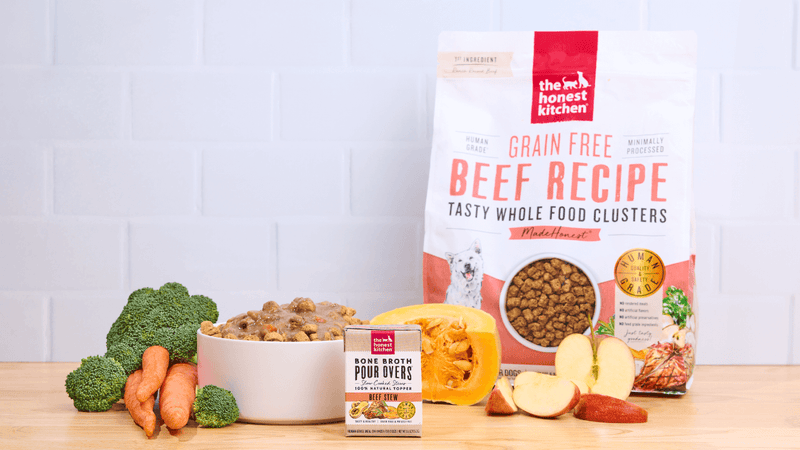
Our Whole Food Clusters are our take on dry food—the world's first human grade dry kibble. Instead of high-heat processing that diminishes nutrition, we cold-press whole food ingredients into bite-sized clusters, then gently roast and dehydrate them. You get the shelf stability and convenience of kibble without sacrificing the quality—88% of our clusters ingredients are sourced from North America. No spray-on flavoring needed because the food actually tastes like real food.
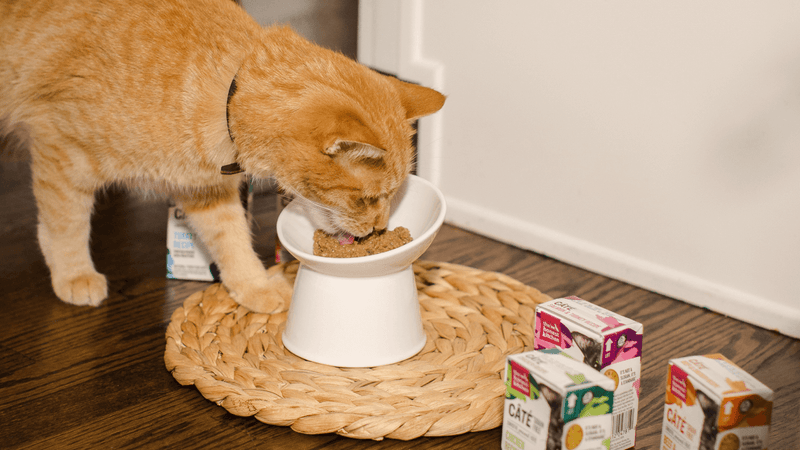
Our wet foods are chef-crafted and pup-approved. Because they're made to human food safety standards, the texture and appearance are noticeably different from commercial canned food—you'll see identifiable chunks of meat and vegetables instead of a uniform paste. That's not a flaw; it's proof the food stayed human edible throughout cooking. It's the convenience of opening a tetra box with the nutritional integrity of something made in a real kitchen.
How to Read a Label With Confidence
Once you know the language, labels stop being mysterious. A few smart habits will separate genuine quality from clever marketing.
Green flags to look for:
- The words "human grade" stated clearly—and ideally, verification of a human food production facility on their website or compliance documentation. Note: this is very different from marketing phrases like "made with human ingredients" or "natural dog food." True human grade is a verifiable standard, not a brand claim. (See the red flags below for examples of what to avoid.)
- Named whole ingredients like chicken, beef, broccoli, sweet potatoes, or spinach instead of vague terms like "meat meal." (Check out our ingredient guide to learn more about what each ingredient does for your dog.)
- Sourcing transparency: the brand explains where ingredients come from, how they're raised or grown, and where the facility is located. Learn how we source our ingredients.
- References to FDA and USDA compliance, ideally with specific certifications (21 CFR 117, AAFCO approval, etc.)
- A clear guaranteed analysis with protein, fat, fiber, and calorie information. (Not sure what to look for? Here's how to read a guaranteed analysis.)
Red flags to avoid:
- "Meat meal," "meat by-products," "poultry by-products," "4D meats" (these are feed-grade indicators)
- Artificial colors or preservatives like BHA, BHT, ethoxyquin, or melamine
- Ingredients you can't trace to their sources
- Marketing photos of fresh vegetables when the ingredient list tells a different story
Finding the Right Food and Transitioning Safely
Every dog is unique, so the best food depends on your pup's age, energy level, digestive needs, and life stage. The good news? Choosing human grade isn't complicated.
Start here:
- Identify your dog's needs—activity level, any digestive sensitivities, and life stage. (Prefer a shortcut? Take our product quiz and we'll match your dog to the right meals in under a minute.)
- Use the label tips above to compare ingredient quality across brands
- Consider what format works for your life: the convenience of dehydrated meals, the fresh-cooked appeal of wet food, or a topper to enhance what you're already feeding
- Introduce new food gradually to let their system adjust
About that transition: A slow switch prevents stomach upset. Here's what we recommend:
- Day 1–3: 25% new food, 75% old
- Day 4–6: 50/50 mix
- Day 7–9: 75% new, 25% old
- Day 10 onward: 100% new
Pay attention to stool consistency, energy levels, and appetite as you go. If your pup has a sensitive stomach, take it slower—14–16 days is better. Learn more about feeding dogs with digestive sensitivities.

Frequently Asked Questions
Is human grade dog food more expensive?
Human grade foods' sticker prices can be intimidating when you see them on the shelf, but when you calculate the cost per day, things shift into perspective. Wholemade Dehydrated, in particular, delivers serious nutritional value without the astronomical price tag of fresh-delivery services or refrigerated foods. Here's the math: a 10-pound box of dehydrated food rehydrates to approximately 40 pounds of prepared meals. You're getting four times the volume for that price. Plus, because our meals are shelf-stable, they last. You're not throwing away spoiled food or making emergency trips to restock. You buy it, store it, and feed it on your schedule. In an internal survey of 1,000 customers, 80% reported improved digestion, 77% reported improved energy and well-being, and 71% reported improved skin and coat health. Those benefits add up fast—and most pet parents find that the daily investment pays for itself through fewer vet visits and a healthier, happier dog.
Can I mix human grade with regular feed-grade food?
Technically, yes—but it defeats the purpose. If you're making the switch to human grade, you're doing it for the standards and the nutrition. Mixing dilutes both. Stick with one or the other. That said, when you're transitioning your pup from one food to another, mixing the old and new is essential to avoid shocking their system. Do a gradual transition (see the timeline in the section above), and consider adding a little of our Perfect Form Herbal Digestive Supplement to support their gut during the change.
Is all dehydrated dog food human grade?
No. Dehydration is just a processing method, not a safety standard. You can dehydrate feed-grade ingredients or human grade ingredients—they're two very different products. Always verify the "human grade" claim on the label and check that it's backed by an actual certified human food facility. If you want to see what genuine human grade dehydrated looks like, our Wholemale Dehydrated meals are the real deal.
How long does human grade food last once opened?
Shelf life depends on the format. Here's what to expect unopened:
- Wholemade Dehydrated: 15 months
- Base Mixes: 18 months
- Whole Food Clusters: 12 months
- Wet Food (tetra boxes): 24 months
Once opened, store in an airtight container in a cool, dry place. Dehydrated and Base Mix meals stay fresh for 4–6 weeks; Clusters the same. Wet food should be used within 3 days after opening, keeping it refrigerated.
Compare that to other refrigerated dog food, which typically lasts about 3-5 days. With no synthetic preservatives, our human grade meals deliver shelf stability and convenience without the nutritional trade-off.
Why does The Honest Kitchen lead the human grade space?
Because we created it. We proved the standard works at scale, and we've spent 20+ years refining every detail—sourcing, testing, facility compliance, traceability. We're transparent about our process so pet parents can trust what they're feeding.
Your Dog Deserves Better. So Do You.
You came here with one question: Would you eat your dog's food?
Now you know why that question matters so much. Because if you wouldn't eat it, your pup shouldn't either. Human grade isn't a shortcut or a trend—it's a foundation.
Here's what we've covered:
Human grade means every ingredient is edible for people and produced in a certified human food facility
It differs from feed-grade in ingredient quality, facility standards, and regulatory oversight
It supports safety through over 100 FDA and USDA standards, rigorous testing protocols, and transparent sourcing
Preparation methods like dehydration preserve nutrients while keeping meals convenient for your life
Your dog can't read labels, but you can. That small effort adds up to a lifetime of better meals.
Ready to make the switch? Explore our full range— Wholemade Dehydrated, Clusters Dry Dog Food, Wet Food, Pour Overs, and Toppers.
Or take our quiz to find what works best for your pup.